
Spain Coastline, Explained: Best Regions, Maps & Coastal Towns for 2026

Did you know the Spain coastline stretches for nearly 8,000 km?
It’s one of the most diverse coastlines in Europe. But also one of the most confusing to plan.
Spain touches three different bodies of water, which is why every region feels completely different.
On the Mediterranean side, you get warm, calm beaches and famous areas like the Costa Brava and Costa del Sol. On the Atlantic coast, places like Costa de la Luz and Costa da Morte are wilder, windier, and much less developed.
And then there are the islands. The Balearic Islands for clear turquoise water, and the Canary Islands for year-round sun and volcanic landscapes.
I’ve personally explored over 10 Spanish islands and driven across every major “Costa” to see what’s actually worth your time.
If you’re already narrowing things down, I’ve broken down routes like this Mallorca road trip I planned.
And a few easy coastal towns you can base yourself near Málaga.
Most guides repeat the same generic advice. I’ll show you where the water is actually warm, which regions are overrated, and how to choose the right part of the Spain coastline for your trip.
Let’s break it down so you don’t waste your vacation days.

Spain Coastline (Quick Answer)
- Spain has ~8,000 km of coastline including islands
- It borders 3 bodies of water: Mediterranean, Atlantic, Cantabrian Sea
- Best for warm beaches → Costa Blanca, Costa Brava, Balearic Islands
- Best for wild nature → Galicia, Asturias, Costa da Morte
- Best for winter sun → Costa del Sol, Canary Islands
If you’re choosing where to go, the biggest decision is simple:
warm Mediterranean vs wild Atlantic.
Map of Coastal Spain (Overview of All Regions)
Coastal Spain – Seas & Zones
Before you choose a beach, it helps to understand the big picture. If you look at a map of coastal Spain, you will see that the country touches three different bodies of water. This is why the coastline of Spain feels so different from region to region.
- The Mediterranean Sea: This covers the east and south-east coast plus the Balearic Islands. It is where you find the warmest water and most of the famous “Costas.”
- The Atlantic Ocean: You find this in the south-west on the Costa de la Luz. It also surrounds the Canary Islands off the coast of Africa.
- The Cantabrian Sea: This is the north coast. It covers the Basque Country, Cantabria, Asturias, and part of Galicia. This area is often called “Green Spain” because of the cliffs and rain.
The first time I drove from Catalonia all the way across the north to Galicia, I didn’t expect the contrast to be this extreme. If you’re considering that kind of route, it helps to look at a few northern Spain coastal towns ahead of time so you can plan realistic stops.
What You’re Looking At
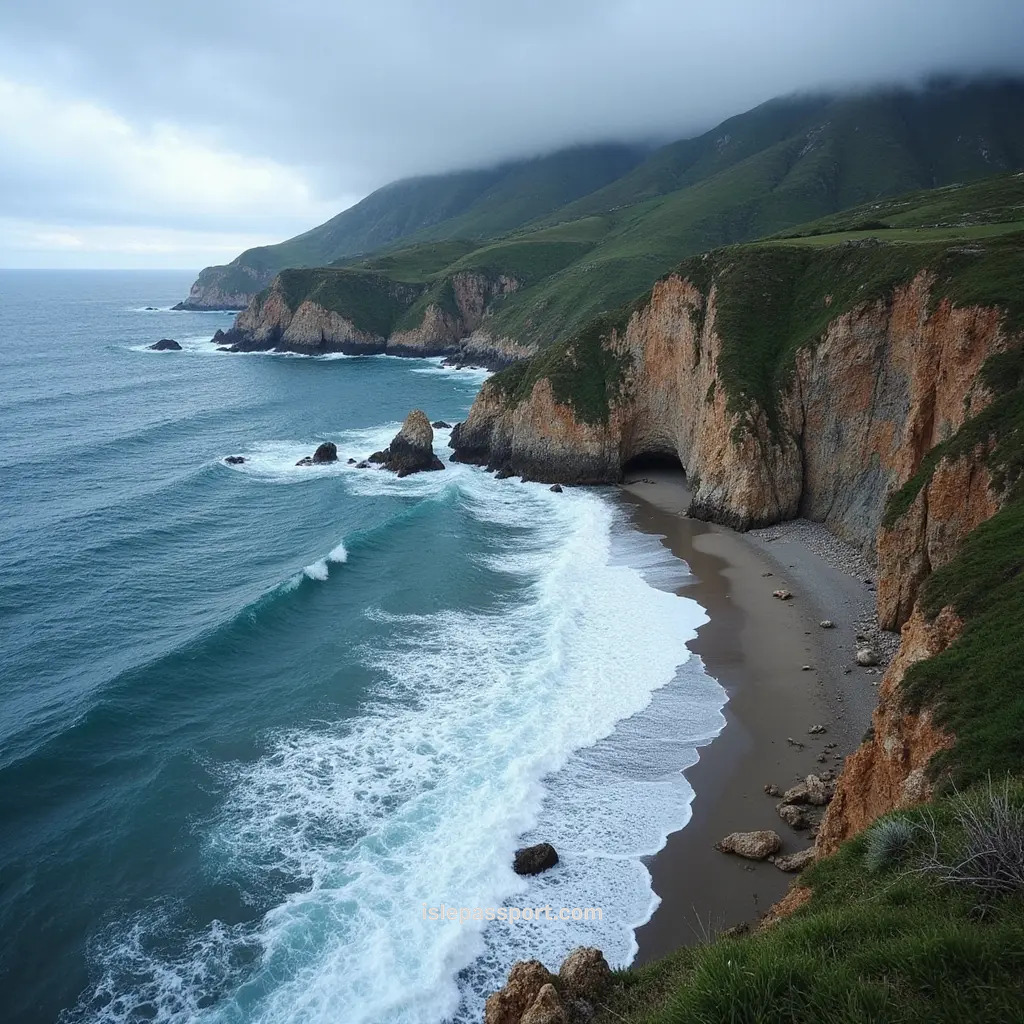
 This part of the spain coastline always feels wilder and greener than anywhere else — Playa del Silencio is my go-to example of how dramatic the Cantabrian coast can be.
- Whenever I want to explain the Mediterranean side of the spain coastline — clear water, bright light, tiny coves — Cala S’Alguer is the place I show people first.
- Bolonia is where the southern spain coastline really shows its mix — Atlantic waves, Mediterranean warmth, and dunes that feel untouched.
- When I think “Balearic,” I think water like this — bright, clear, and almost unreal. Caló des Moro is my favorite snapshot of the islands.


If you sketched a very simplified Spanish coast map, it would look something like this:
- Top edge (north): cooler, green, dramatic cliffs – Cantabrian Coast
- Right side (east): Mediterranean, warmer water – Catalonia, Valencia, Murcia
- Bottom (south): mix of Mediterranean and Atlantic – Andalusia
- Plus two big island groups: Balearic Islands (Mediterranean) and Canary Islands (Atlantic, off Africa)
When you look at a proper map of coastal Spain, the named “costas” are just marketing labels laid over these bigger regions.
Why Spain’s Coastline Is So Varied


The Spanish coastline changes every few hours of driving for a few reasons.
- The North: This area is influenced by the Atlantic and the Bay of Biscay. You get more rain and bigger waves. This is the heart of Green Spain with much greener landscapes.
- The East and South-East: This is pure Mediterranean. You get warmer and calmer water with a lot more sun. It is also where most of the big resorts are located.
- The South-West: The Costa de la Luz is Atlantic again. It has huge beaches and plenty of wind for kitesurfing. You will see fewer high-rise buildings here.
- The Islands: The Balearics offer calm Mediterranean coves. The Canaries provide year-round Atlantic sun and volcanic sand.
One summer I swam comfortably in Alicante in May but froze in Asturias in August. It is the same country but the seas feel completely different.
I have made every mistake possible. I have shivered on windy Atlantic dunes and gotten stuck in terrible tourist traps.
If your priority is swimming, it’s worth focusing on regions where the water stays consistently warm. I’ve broken that down more clearly in my southern Spain beach guide, where I grouped beaches by actual water conditions rather than just popularity. That alone can save you from planning a “beach trip” that turns into a windy coastline walk.
When people ask for the name of the coastline of Spain, there is not just one answer. The government took this long stretch of sand and branded it into the “Costas” we see today.d it into several spain coastal regions – the “costas” we’ll go through in a second.
Spain Coastline Length Explained
Spain’s Coastline Length
(CIA World Factbook)
(Spanish IGN)
Depending on who you ask, you will see two different numbers for the length of the coast.
- The Official Baseline: Around 4,964 km according to the CIA World Factbook. This is the number most maps use for the main perimeter.
- The Real-World Total: Nearly 8,000 km if you include every island, tiny bay, and rocky inlet. This is the figure used by Spain’s National Geographic Institute.
So if you are wondering how much coastline Spain actually has, the answer depends on how you measure it. I always stick with the 8,000 km figure. When you are actually on the ground exploring the hidden coves of the Balearics or the deep inlets of Galicia, it certainly feels that long.
Either way, it is a massive amount of coast for one country to have.
Spain Coastal Regions Explained (Mediterranean, Atlantic & Islands)
Let’s break down the main Spain coastal regions you will see on any map. I have used simple descriptions so you can quickly tell the difference between them.
If you’re already comparing options, it helps to look at specific towns rather than just regions. I’ve pulled together a few of the most livable coastal towns in Spain separately, especially if you’re thinking beyond just a short trip.
Costa Brava (Catalonia) – Wild Coves & Cliff Paths
The Costa Brava is the rugged part of the Mediterranean coast near the French border. This is exactly how the Mediterranean side of the Spain coastline feels to me. It is rocky, wild, and incredibly beautiful.
- What to expect: Small coves called calas that you reach by hidden stairs or coastal paths.
- The water: It is crystal clear and perfect for snorkeling.
- Top towns: You should visit Tossa de Mar, Cadaqués, and Roses.
- The highlight: Walking the Camí de Ronda. This is a famous coastal path that connects the beaches and offers the best views in the region.

Some of my favorite swims in Spain happened here. I love the early mornings when the cliffs glow and the beaches are still empty. It is the perfect spot if you want a mix of hiking and swimming and do not mind a few hills.
If you like quiet coves instead of long sandy beaches, this is a standout. It even inspired artists like Salvador Dalí.
If you’re deciding where to stay, it’s worth comparing a few of the prettiest coastal towns in this part of Spain. Some are much quieter (and honestly better) than the bigger resort bases.
Costa Dorada – Family Beaches & Roman Ruins
Moving south from Barcelona, the Costa Dorada (or “Golden Coast”) is where I learned that simple is often better. If you need shallow, warm, and easy beaches, this is your spot.
- The Vibe: Long stretches of golden sand and very calm water.
- Top Towns: Salou is the big resort hub, while Cambrils is a slightly quieter fishing village with incredible seafood.
- History: Tarragona is a must-see. It has Roman ruins, like a massive amphitheater, sitting right next to the Mediterranean Sea.
I stayed here during a heatwave and the shallow water warmed up like a bathtub. It is perfect for families with small kids. If you have children who need to burn off energy, PortAventura World is right next to Salou and is one of the biggest theme parks in Europe.
These golden sands are incredibly easy to reach if you are using Barcelona as your base.
If you don’t want to overcomplicate your trip, I’d look at a few simple coastal getaways from Barcelona. Places you can reach quickly without needing a car, but that still feel like a proper beach escape.
If you want a mix of history and easy beach days, this is one of the most straightforward sections of the coastline of Spain.
Costa Blanca – White-Sand Coves & Fishing Villages
The Costa Blanca is my go-to recommendation when someone wants warm water, easy swims, and pretty towns without overthinking it. It is much more than just the high-rises of Benidorm.
When I explore this part of the Spanish coastline, I always look for the spots that still feel authentic. Here is what makes this region special:
- The Vibe: You get bright white houses, incredible light, and calm bays.
- Top Towns: Jávea (Xàbia) has some of the best coves, Altea feels like a Spanish Santorini with its blue-domed church, and Villajoyosa is famous for its bright, multi-colored houses.
- Hidden Gems: If you want to escape the mainland, take the short ferry to Tabarca Island. It is a tiny, inhabited marine reserve with crystal-clear water that is perfect for snorkeling.
Whenever someone asks me for warm water, nice towns, and easy logistics, this is the area I recommend first. You can even use the local L6 Tram to hop between the coastal towns without needing a car.
It also tends to be more affordable than people expect. If budget is part of your decision, there are a few coastal towns here that offer surprisingly good value compared to other Mediterranean regions.
Costa Cálida – More Local, Fewer Tourists
The Costa Cálida in Murcia is much more low-key than the regions to the north. I once biked around the Mar Menor lagoon at sunset. It was calm, flat, and full of local couples walking by the water. The whole area felt shockingly peaceful and local.
- The Sea: The water is warmer here because it is sheltered. It is technically still the Mediterranean but feels much milder.
- The Lagoon: The Mar Menor is Europe’s largest saltwater lagoon. It is famous for its therapeutic mud baths and very shallow water.
- Culture & Nature: If you want a break from the beach, the historic city of Cartagena is nearby with its massive Roman Theatre. For wild nature, head to Calblanque Regional Park for unspoiled dunes and golden sand
There is far less international tourism here compared to the Costa Blanca. If you look at a Spain coastal map and want a spot that is cheaper and calmer, this is where I would start looking.
Because it is so affordable, you can find some of the most affordable beach towns in Spain tucked away in this region. It is the perfect choice for slow travelers who want to avoid the “resort” feeling and see how Spanish families actually spend their summers.
Costa de Almería – Desert Coast & Hidden Beaches

Cabo de Gata taught me that parts of the Spain coastline are practically a desert. It is one of the most unique and unbelievably beautiful places in Europe.
The first time I looked at the map, I was surprised by how empty it seemed. In reality, this stretch is a rugged paradise.
- The Landscape: Think dry, volcanic mountains and massive salt flats. It is a UNESCO Biosphere Reserve, so it feels very “raw” and protected.
- The Beaches: You won’t find many high-rises here. Instead, you get wild spots like Playa de los Genoveses and the famous Playa de los Muertos.
- The Cost: Of all the Spanish coasts, this is where I have paid the least for food and accommodation. If you like quiet, it is unbeatable.
Pro Tip for 2026: To reach Playa de los Muertos, you have to hike down a steep, rocky path for about 15 minutes. Wear real shoes, not flip-flops! Also, bring plenty of water because there are zero shops or bars once you get down to the sand.
If you like quiet towns and “menu del día” deals for a few Euros, this is the best-value area on the Mediterranean. It is perfect for those who want a “getaway-from-it-all” vibe.
If you are already picturing this trip, Almería to Málaga coastal road trip itinerary breaks it down. I’ve mapped out the best stops and viewpoints so you don’t miss the hidden coves tucked between the cliffs
Costa Tropical – Subtropical Microclimate
The Costa Tropical always feels a little softer. You get warmer air, slower evenings, and views that look like they were painted on. It is located right between Almería and Málaga but feels like a different world.
- The Microclimate: The Sierra Nevada mountains protect this area from north winds. It is one of the few places in Europe where you will see mango, avocado, and papaya trees growing right next to the sea.
- The Sights: Towns like Almuñécar and Salobreña feature white-washed houses and Moorish castles perched on cliffs above the beaches.
- The Vibe: It is not as famous as the Costa del Sol. This is exactly why I love it. It is a great pick when you want authentic “Andalusia energy” without the heavy crowds.
I once spent a winter afternoon here where I could see snow on the mountains while I was sitting on the beach in a t-shirt.
Since this area is so close to the mountains, it is also a perfect base if you want to visit the most beautiful white villages in Andalusia like Frigiliana.
Costa del Sol – Big Cities & Resort Life
The Costa del Sol is likely the most famous stretch of the Spain coastline internationally. I have come here for winter sun more times than I can count. Even in January, I have found myself eating lunch outside in a t-shirt.
- The Hub: Málaga has transformed into a world-class cultural city. If you want something quieter but still well-connected, it’s worth looking at smaller coastal towns just outside Málaga rather than staying directly in the busiest areas.
- The Famous Resorts: You will find well-known spots like Marbella and Fuengirola here. These are perfect if you want easy logistics and lively beach clubs.
- The Atmosphere: It attracts a lot of international visitors. For some, this is exactly the energy they want. For others, it can feel a bit too built up.
And if you’re stuck choosing between this region and the Atlantic side, comparing Costa del Sol vs Costa de la Luz properly makes a huge difference. They’re completely different experiences.
Costa del Sol is one of the easiest parts of the Spanish coast to visit year-round. Even in winter, daytime temperatures stay surprisingly mild compared to most of Europe. Which is why many travelers head south when planning an off-season trip.
If you’re considering a colder-season visit, it’s worth looking at a few destinations in southern Spain that stay warm enough for outdoor exploring.
Costa de la Luz – Windy, Wide, Atlantic Beaches
The Costa de la Luz (or “Coast of Light”) is on the Atlantic side of Andalusia. It is very different from the Mediterranean resorts. The first time I stepped on a wide dune here, the wind almost took off my hat. But the light is incredible, especially at sunset.
- The Beaches: You get long, open stretches of sand backed by natural dunes. The waves are bigger here and the water is refreshing.
- The Vibe: This area is famous for towns like Tarifa and Conil. It attracts kitesurfers, surfers, and travelers who prefer boutique stays over high-rise hotels.
- The Highlights: This is often rated as one of the most beautiful coasts in Spain. You should focus on the area around Cádiz and the nearby protected natural parks.
Costa de la Luz still feels much quieter than many Mediterranean resorts, with long Atlantic beaches and small towns that move at a slower pace. If you enjoy places that feel authentic and less developed, you’ll find several towns along this coast that capture that atmosphere.
A few of them also appear in my guide to the most beautiful fishing villages in Spain, which highlights coastal towns where the traditional maritime culture is still very much alive.
If you are trying to decide between this wild Atlantic wind and the calmer Mediterranean bays, you can also check out a full Mediterranean vs Atlantic coast comparison.
This region is a top pick if you want an affordable escape. Because it is less developed, your money often goes much further in the local tapas bars and family-run guest houses.
Coast of Galicia – Cíes Islands & Cliffs
Up in the north-west, the coast of Galicia gives you:
- Rías: These are deep inlets that cut into the coastline like fjords.
- Drama: You will see massive cliffs and lonely lighthouses at the edge of the world.
- Cíes Islands: This national park is home to Playa de Rodas. It is often listed among the best beaches in the world.
My hardest-to-forget beach day was here. It has turquoise water and that fresh Atlantic smell. It is dramatic, cool, and feels more like a wild frontier than a classic beach resort.
If you’re hoping to avoid Spain’s busier coastal hotspots, you’ll find several peaceful places in my guide to underrated coastal towns in Northern Spain, where quiet harbors and raw Atlantic landscapes are much more common than crowded beach resorts.
Coast of Asturias – Wild Coves & Fishing Villages
The Asturian coast is one of my favorite parts of the coastline of Spain on paper and in people’s stories:
- Small fishing ports
- Green cliffs
- Wild, less-known beaches like Playa del Silencio. The first time I saw Playa del Silencio, it felt like a secret someone forgot to hide properly.
If you’re into slow travel and don’t care if the water is a bit cooler, this side of the Spanish coastline is gold.
Coast of Cantabria – Surf & Elegant Towns
I came here expecting only surf towns and instead found elegant villas and calm promenades. It was a very nice surprise. Cantabria’s coast offers a unique mix of styles.
- Surf & Sand: Some of the best waves in the country are found here.
- Santander: A refined city with a beautiful bay and grand architecture.
- Unique Towns: Places like Comillas offer elegance and even a building designed by Gaudí.
Cantabria sits in a nice middle ground along Spain’s northern coast. The landscape is dramatic enough to feel wild, but the towns themselves are comfortable and easy to navigate. Many of them are compact seaside communities where you can walk everywhere, which is why several appear in my guide to coastal towns in Spain you can explore without a car.
Basque Coast – Food, Culture & Dramatic Shoreline
Finally, the Basque Coast is where the mountains of northern Spain meet the sea in a spectacular way. If you want culture and coastline in one hit, this is one of the strongest regions to visit.
- World-Class Food: You have San Sebastián for its famous pintxos and Getaria for incredible grilled fish. I have eaten some of my best seafood here. It is usually just simple fish, salt, and lemon, but it is perfect.
- Iconic City Beaches: La Concha in San Sebastián is one of the most beautiful urban beaches in Europe.
- Surf and Sand: Beyond the cities, you will find smaller coastal towns and rugged surf beaches that are world-famous for their waves.
The scenery here is dramatic, with steep green cliffs dropping straight into the sea, and the food alone makes the region worth the trip.
Small fishing ports and lively seaside towns dot the coastline, many of them known for excellent seafood and beautiful waterfront walks.
If you’re mapping out stops along the northern coast, a few of these places also show up in some of the most scenic seaside towns across Spain’s northern coast.
Spanish Islands – Where the Coastline Gets Even Better
If you’re only looking at mainland Spain, you’re missing a huge part of the picture.
Some of the best water, beaches, and coastal towns in Spain are actually on the islands.
I didn’t fully understand the Spain coastline until I started exploring these.
Balearic Islands (Mediterranean)
This is where you get that clear, almost unreal water.
Think:
- Hidden coves
- Bright turquoise bays
- Small beach towns instead of big cities
Mallorca is usually the easiest place to start when exploring Spain’s islands. The coastline is surprisingly varied, with quiet coves, dramatic mountain roads, and small seaside towns that are easy to explore in a few days. If you’re planning to drive around the island, it helps to look at a detailed coastal road trip route around Mallorca, especially along the scenic Ma-10.
Timing can also make a big difference. Late spring is often ideal, and what Mallorca is like in May gives a good sense of why many travelers prefer visiting before the summer crowds arrive.
And if beaches are your main focus, some of the island’s best spots aren’t the famous ones. Many of the quieter coves appear in a collection of Mallorca’s lesser-known beaches and hidden calas.
This side of Spain generally feels polished, warm, and very easy to travel.
Canary Islands (Atlantic)
Completely different energy.
Volcanic landscapes, black sand beaches, and year-round sun.
Places like Lanzarote and La Palma feel almost unreal. Like you’re not even in Europe anymore.
The water is cooler than the Mediterranean, but the climate is much more stable in winter.
Why Islands Change Your Trip
If you want:
- Warmer water → Balearics
- Winter sun → Canaries
- Fewer crowds (outside peak) → both
Adding just one island to your Spain itinerary completely changes the experience.
Honestly, some of my best beach days in Spain didn’t happen on the mainland at all.
Spain Coastline Map (Interactive + Regional Highlights)
Coastal Town Clusters
If you’re a visual planner, this is the point where you’d open a Spain coastline map and start dropping pins.
You’ll see that many of the nicest towns aren’t the biggest – they’re the smaller ones just outside the most famous resorts.
Spain Coastal Cities Map
Main Coastal City Anchors
These are the cities you’ll most likely fly into or out of, then fan out to smaller towns from there.
Best Parts of the Spain Coastline (Ranked by Travel Style)
When friends ask me which coast is “best,” I always answer with another question: “Do you want warm water or wild scenery?” Because the choice really starts there.
Here’s how I’d break it down.
For Swimming & Warm Water – Mediterranean (Costa Blanca + Costa Brava)
If your main priority is:
- Warm water
- Lots of swimmable days
- Plenty of beach options nearby
…then the Mediterranean coast of Spain wins, especially:
- Costa Blanca – gentler beaches, family-friendly, great if you choose your town well
- Costa Brava – a bit wilder, with smaller coves and beautiful water
For Wild Nature – Northern Spain (Asturias + Galicia)

If you don’t care as much about water temperature and want nature:
- Asturias and Galicia are hard to beat
- You get cliffs, empty-feeling beaches outside August, and a very different side of the Spanish coastline
This is the side I’d pick for hikes, photography, and a slower pace.
For Culture & Food – Basque Coast
If you want coastline + serious food + strong identity, the Basque Coast around San Sebastián and Bilbao is the pick.
You can:
- Eat incredibly well
- Swim at La Concha or nearby beaches
- Use the towns as a base to explore smaller spots like Getaria and Zarautz
For Budget Travel – Costa de Almería

From everything I’ve seen and priced out, Costa de Almería is one of the cheaper ways to enjoy the Mediterranean coast of Spain:
- Fewer luxury resorts
- Good value menus and accommodation in smaller towns
- Cabo de Gata’s wild beaches if you don’t need infrastructure everywhere
For Families – Costa Dorada
If I had kids and wanted an easy setup:
- Costa Dorada gives long, sandy beaches
- Easy access to theme parks like PortAventura
- A proper city (Tarragona) with history for day trips
It’s one of the most straightforward stretches of the spain coastline for family holidays.
For Year-Round Sunshine – Costa del Sol
If you want:
- Mild winters
- Big choice of flights
- Lots of accommodation options
…the Costa del Sol is the most reliable section of the Spanish coastline for year-round trips.
Water isn’t warm in winter, but the sun and air temperatures are usually much kinder than the north.
Best Coastal Towns on Each Part of the Spanish Coastline
Here are a few towns I’d actually check for stays when looking at the Spain coastline map, broken down by area.
Mediterranean Coast


Jávea/Xàbia (Costa Blanca)
Feels more small-town than resort if you avoid peak season, with a nice mix of expats and Spanish families. I stayed in a small apartment near the port — morning swims, bakery runs, perfect routine.
Nerja (Costa del Sol)
Smaller than Málaga, with cliffs, coves, and the Balcón de Europa viewpoint. Good compromise if you want sunshine without giant towers everywhere.
Altea (Costa Blanca)
White old town, sea views, relaxed vibe. A strong candidate if you’re chasing that classic white-washed Spain look.
The old town is absurdly pretty at night — blue domes glowing above white walls.
Atlantic Coast (Andalusia)


Tarifa (Costa de la Luz)
Windy, yes. But also:
- Long beaches
- A chilled-out town
- A very different feeling from the Mediterranean side
If you like kitesurf vibes, this town feels electric.
Conil de la Frontera (Costa de la Luz)
- Wide beaches, white houses, more Spanish tourism than international.
- Wonderful for sunsets — some of the longest beaches I’ve walked in Spain.
If you’re trying to choose between the Costa del Sol vs Costa de la Luz, these are the two towns I’d compare: Tarifa/Conil vs Nerja/Málaga.
Cantabrian Coast (North Spain)


Cudillero (Asturias)
Steep fishing village with colorful houses. Very photogenic, feels like real life with some tourism layered on top.
Feels like a postcard when you first walk into the harbor.
Comillas (Cantabria)
Elegant old town, a Gaudí building (El Capricho), and a beach. Nice balance of culture and coast.
I went mainly for the Gaudí building — ended up loving the beach more.
Getaria (Basque Country)
- Small, with a harbor and a beach, and great grilled fish. Easy add-on to San Sebastián.
- One of the best seafood lunches I’ve ever had in Spain was here.
Canary Islands (Bonus)
- January in Lanzarote—warm enough for a sun hat, dramatic enough to make you forget you’re in Europe in winter. The volcanic landscapes here are otherworldly.
- La Seu at golden hour is one of those moments that makes Palma feel completely worth it as a first base. The old town, the waterfront, the cathedral — all of it walkable, all of it this good. It’s why I keep recommending Palma to first timers over anywhere else on the island.


Not technically part of mainland Spain’s coastline, but still part of the country and worth mentioning are the Canary Islands.
Lanzarote stands out for its volcanic landscapes, black and golden beaches, and wide open spaces once you get outside the main resort areas.
La Palma feels greener and more mountainous, with excellent hiking and a handful of relaxed coastal towns.
Both islands also come up often when talking about quieter Spanish islands that are still relatively uncrowded. Especially compared with some of the more famous Mediterranean destinations.
Best Beaches Along the Spain Coastline
Some individual beaches are so famous that they tend to come up in almost any discussion of Spain’s coastline.
But these are only a small sample of what the country offers. From the clear coves of the Balearic Islands to volcanic shores in the Canary Islands and quiet stretches of sand on the mainland, there’s far more variety than most travelers expect.
If you want a broader look beyond these few examples, you’ll find many more in a collection of standout beaches across Spain’s different coastal regions.
Playa de Rodas (Galicia)
On the Cíes Islands, near Vigo, Playa de Rodas is a curved white-sand beach that’s been voted among the best in the world. You can only reach it by boat, and numbers are controlled, which helps it stay special.
The ferry ride alone is worth the trip — the water looks tropical, but it’s cold.
Playa de los Muertos (Almería)
Despite the intense name (“Beach of the Dead”), Playa de los Muertos is known for clear water and a wild setting in Almería. You usually have to walk down from a parking area above, which filters the crowds.
Bring proper shoes — the descent surprised me the first time.
Cala Montjoi (Costa Brava)
Cala Montjoi is a small cove on the Costa Brava, with a mix of pebbles and coarse sand, backed by hills. It’s also famous because this area once hosted one of Spain’s most legendary restaurants (elBulli).
Quiet, protected, and a great swim early in the morning.
Playa de la Concha (Basque Country)

La Concha in San Sebastián is the classic Spain coastline image: a horseshoe-shaped bay with a city behind it. Even with crowds, it works because the city and beach fit together so well.
I’ve swum here dozens of times — even when it’s busy, it works.
Spain Coast Frequently Asked Questions
How much coastline does Spain have?
Officially, Spain has about 4,964 km of coastline, according to the CIA World Factbook and other reference sources.
If you include every nook, cranny, and island as measured by Spanish geographic institutes, you’ll see figures close to 8,000 km.
Both are correct – they’re just measured differently.
What is the name of the coastline of Spain?
There isn’t a single name. Instead, Spain divided the coastline of Spain into branded Spain coast names like:
Costa Brava
Costa Dorada
Costa Blanca
Costa Cálida
Costa de Almería
Costa Tropical
Costa del Sol
Costa de la Luz
Plus northern names like Costa da Morte, Costa Verde, Costa Vasca
Each has its own style, climate, and level of development
What part of Spain has the best coast?
From a slow-travel point of view:
For nature & space: Asturias + Galicia (north coast)
For classic beach holidays: Costa Blanca + Costa Brava
For food + city life: Basque Coast (San Sebastián, Bilbao area)
For winter sun: Costa del Sol
There’s no single “best” section of the Spain coastline – but those are the strongest choices by theme.
What is the top 10 largest coastline in the world – and where does Spain fit?
Lists vary slightly by source, but the usual top 10 largest coastlines in the world include:
Canada, Norway, Indonesia, Russia, Philippines, Japan, Australia, United States, New Zealand, and China.
Spain doesn’t make the top 10. With its ~4,964 km coastline, it sits much lower down the global ranking but still has a surprisingly varied shore for its size.
Is Spain’s coastline good for swimming?
Yes – but where you go matters.
Mediterranean coast (Costa Brava, Blanca, del Sol) → Warmer water, calmer most days, better for casual swimming.
Atlantic / Cantabrian coast (Galicia, Asturias, Cantabria, Basque Country) → Cooler water, often more waves. Great for surfing and wild beaches, but sometimes too rough for comfortable swims, especially for kids.
Plan Your Trip Along the Spain Coast (Practical Tips)
Here’s how I’d think about planning a real trip along the Spanish coastline, based on everything above.
Best Months to Visit
📅 Best Months to Visit the Spanish Coast
For most of Spain’s coast, May–June and September–early October are ideal. July is warmer and busier, August is peak crowds (especially on the Mediterranean), and winter works best for Costa del Sol and the Canary Islands if you’re mainly after mild temperatures.
One thing I learned quickly: Spain’s coast can feel like different climates entirely — don’t assume July is warm everywhere. I’ve had 18°C days in Asturias in peak season while friends were melting in Alicante.
Renting a Car vs Going Car-Free
Car-free works well if:
- You focus on the bigger Spain coastline cities and well-connected towns (Barcelona, Valencia, Málaga, Santander, San Sebastián, Alicante).
- You’re using trains and buses between main points.
Car is helpful if:
- You want remote beaches (Cabo de Gata, Playa del Silencio, some Costa da Morte spots).
- You’re linking multiple small towns in one region.
When I rent a car on the Spanish coast, I usually book through a local rental company rather than the big chains — prices are better and pickup is faster. If you want something simple and affordable, this local option has always treated me well.
For a first trip, I usually suggest:
- Pick one or two coastal regions
- Combine cities in north Spain or Mediterranean hubs with 1–2 smaller towns
- Use public transport and add a short car rental only for the “hard-to-reach” bits if you really need them.

How to Split Your Trip Region by Region
If you have:
- 1 week: pick one coast (north OR Mediterranean) and a maximum of 2–3 bases.
- 2 weeks: one week north, one week Mediterranean/Andalusia, or one long slow trip along just one big region.
Trying to see every part of the Spain coastline in one go just leaves you tired and annoyed at buses.
Sample 7-Day Coastal Itineraries
🗺️ Sample 7-Day Coastal Routes
Three easy, no-car itineraries you can plug straight into a Spain coastal trip.
Barcelona → Costa Brava → Valencia / Alicante
- Days 1–2
Barcelona – city wandering, tapas, and a warm-up beach day.
- Days 3–4
Costa Brava – base in Tossa de Mar or Roses for coves and coastal walks.
- Days 5–7
Valencia or Alicante – bigger city beach vibes and easy swims to finish.
Perfect if you want warm water, pretty towns, and everything train-friendly.
Bilbao → San Sebastián → Getaria / Zarautz → Santander / Gijón
- Days 1–2
Bilbao – Guggenheim, riverside walks, and first pintxos.
- Days 3–4
San Sebastián – La Concha beach and old-town bar hopping.
- Day 5
Getaria or Zarautz – small Basque coast town, surf + grilled fish.
- Days 6–7
Santander or Gijón – bigger coastal city to wrap things up.
Best for cooler weather, food, and green cliffs instead of classic “sun resort” energy.
Málaga → Nerja → Cádiz / Conil
- Days 1–2
Málaga – museums, tapas, and an easy city-beach start.
- Days 3–4
Nerja – coves, Balcón de Europa views, and slower evenings.
- Days 5–7
Cádiz or Conil – wide Atlantic beaches, sunsets, and windier, wilder coast.
Great if you want sun, history, and a taste of the Costa de la Luz without driving.
Final Thoughts on the Spanish Coastline
Every time I come back to the Spain coastline, I’m reminded how impossible it is to generalize it.
My first trip was chaotic because I didn’t understand the regions. My later trips were perfect because I finally did.
The more time I spend reading, planning, and talking to people who travel slowly along the Spanish coastline, the more obvious it becomes: there isn’t one “Spanish coast.” There are many.
If you treat the coastline of Spain as one long theme park, it’s overwhelming. If you break it into a few spain coastal regions and let each one be its own little world, it suddenly becomes manageable – and honestly, a lot more fun.
Start with one coast that matches how you like to travel, add one or two towns that feel right, and ignore the feeling that you “have to see everything.” Spain will still be there next year.
If you want to go deeper, the full Spain Coastal guide links all regional guides, fishing villages, quiet towns, budget destinations, and hidden spots in one place.
Before You Book: The Tools I Actually Use
I only link to tools and platforms I’ve personally used and would use again. If you book through my links I earn a small commission at no extra cost to you — which helps me keep writing these guides.
Sort by guest rating above 8.5 and check the map view before confirming.
Book as soon as you confirm flights. Summer prices in the islands rise fast.
Routes sell out in July and August. Book early for Balearic islands.
Boat tours, kayaking, guided hikes. Morning slots go first.
I never travel without it — covers illness, cancellations, and lost luggage.
The easiest way to move between coastal towns without a car. Prices rise closer to departure.
💛 Loved this guide?
If it helped you plan your trip or discover somewhere new, you can help me create the next one. Every guide is free to read, independently researched, and made with travellers like you in mind.
