

Best Beach Towns Near Barcelona (Beaches, Day Trips + Hidden Gems)

Barcelona has a beach problem. Not the beaches themselves.
Barceloneta is perfectly fine on a Tuesday morning in May when the city hasn’t fully woken up yet.
The problem is what happens to it by July. Or on any Saturday between June and September.
The good news: the best beach towns near Barcelona are under an hour away by train. And almost all of them have cleaner water, fewer crowds, and more character than anything in the city.
Sitges in 35 minutes. Tarragona in an hour. Hidden coves on the Costa Brava with a bus connection from Blanes. No car needed for most of it.

I spent my first two trips doing what everyone does. Taking the metro to Barceloneta, arriving at 11am thinking I was early. And spending 20 minutes navigating between towels trying to find a patch of sand that wasn’t already someone else’s living room.
The third trip I took a train instead. That changed everything.
Thirty-five minutes from Barcelona Sants. I was sitting on a beach in Sitges with room to breathe, a cold drink in my hand, and approximately zero people within three metres of me in any direction.
That was the moment I understood that the best beaches near Barcelona are not in Barcelona.
They’re on the Costa Brava to the north. Dramatic cliffs, medieval towns, turquoise water. And on the Costa Daurada to the south. Long sandy beaches, easy train access, towns that feel like real places rather than tourist infrastructure.
Most of them are under an hour away. Several you can reach for less than €5 on the regional train.
This guide covers the ones worth the trip, how to get there without a car, and which town fits which type of trip.
If you’re planning a bigger trip along the coast, I’ve broken down the best coastal towns in Spain. Including the ones that are actually worth staying overnight.
Best beaches near Barcelona — quick picks by type
- If you’re looking for space, this is your spot! 🌴 Castelldefels has these massive, wide beaches where you aren’t literally touching elbows with your neighbor. Plus, the promenade is perfect for a long afternoon bike ride.
- Those tiny white and green houses are the iconic face of Garraf Beach. It’s the shortest train ride on this list (25 mins!) but feels completely different from Barcelona.
- This is Cala Sant Francesc in Blanes, and yes, the water really is that blue. It’s a bit of a hidden gem away from the main town beach.
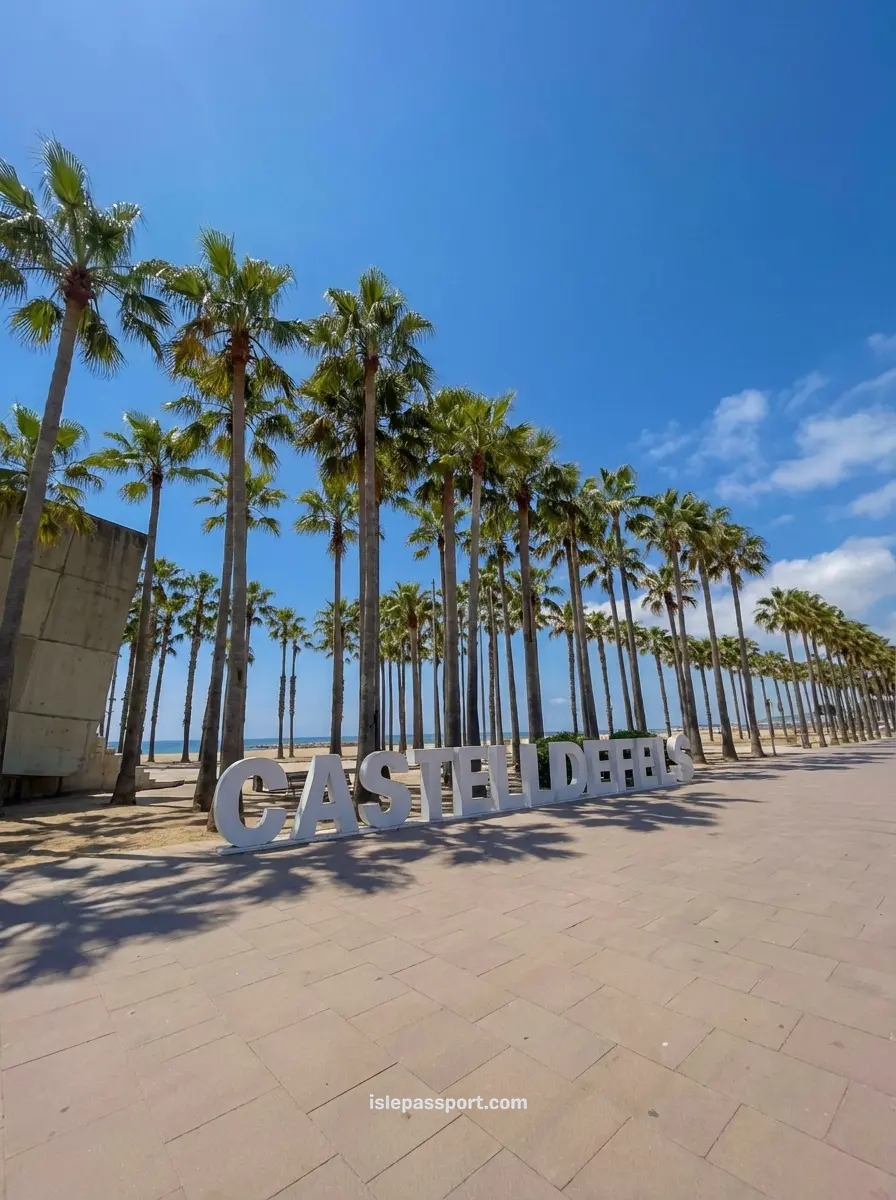
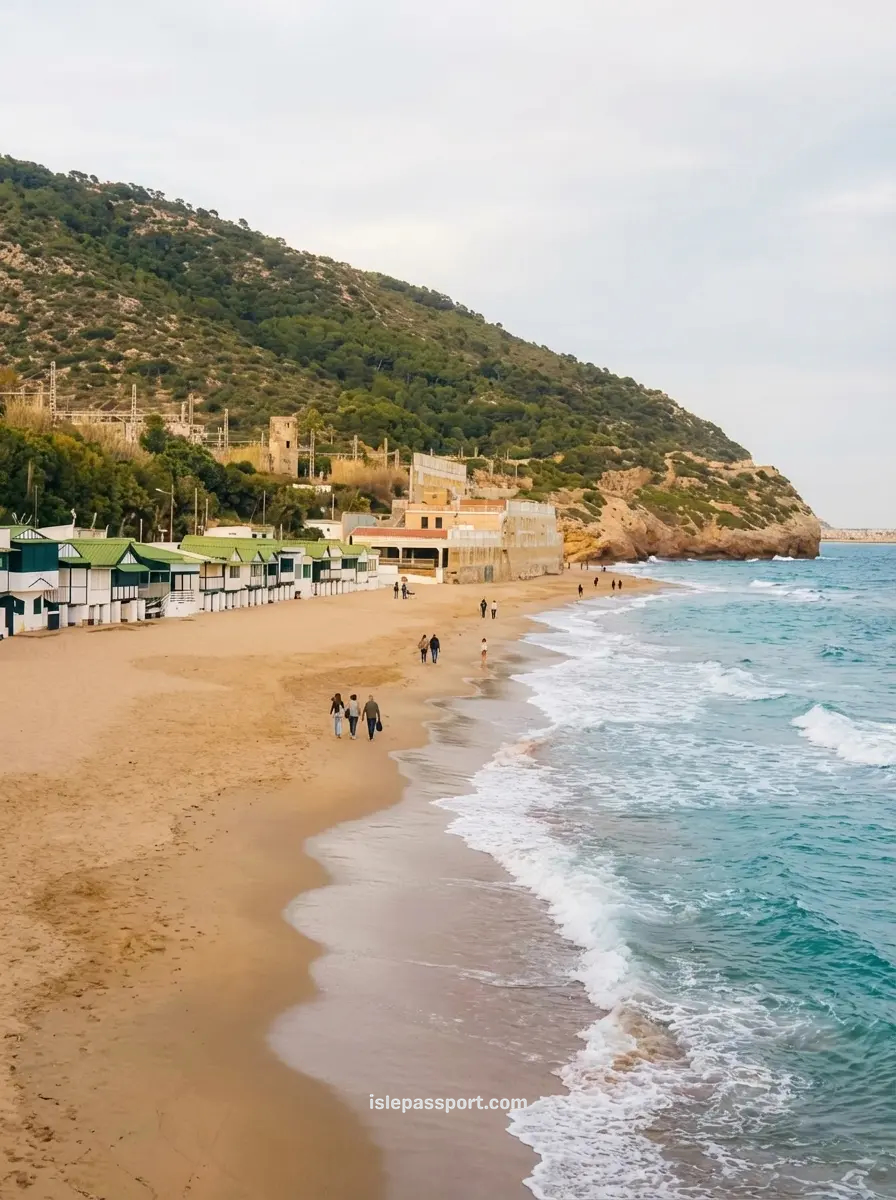
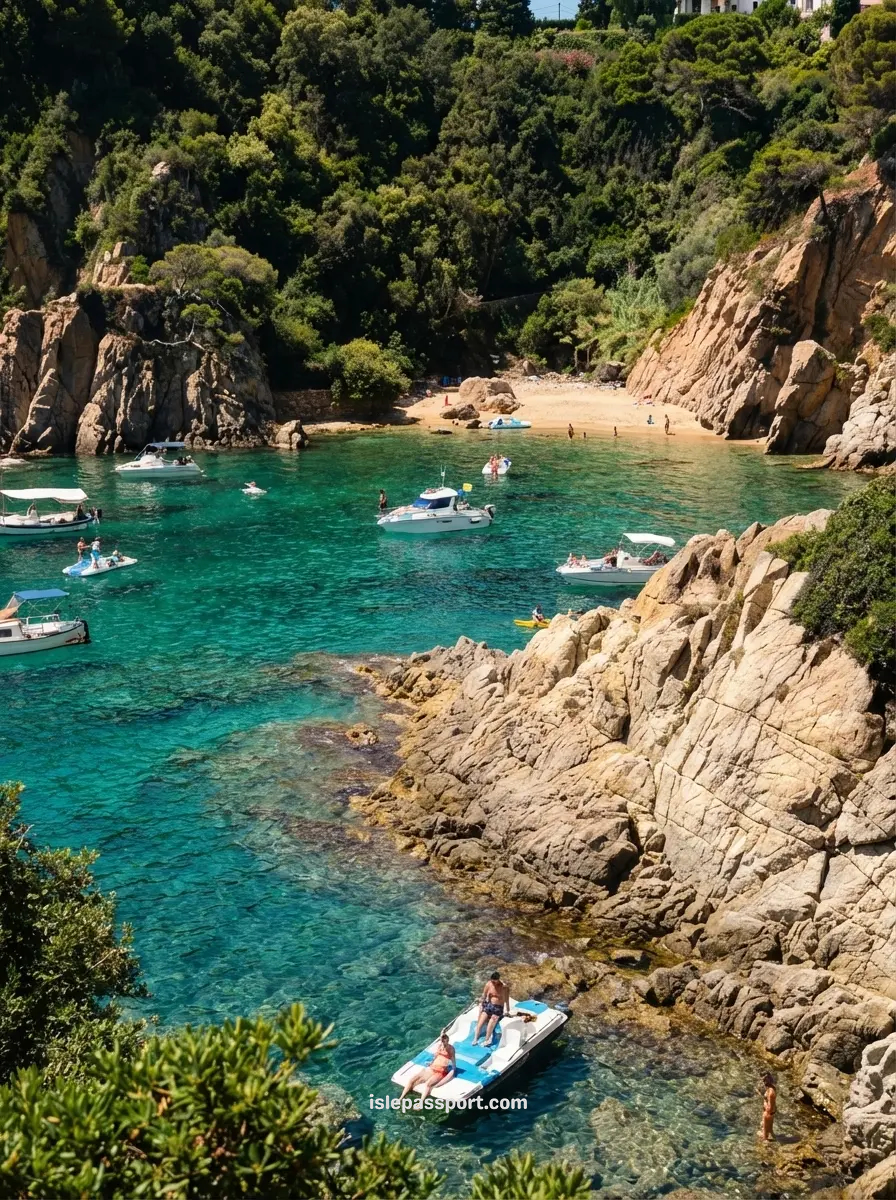
People ask me versions of this constantly: is there a beach near Barcelona worth going to? Are there beaches around Barcelona that aren’t Barceloneta? What are the best beaches outside Barcelona? The answer to all of them is the same: yes, several, and they’re significantly better than the city beach.
Here are the best beach options near Barcelona by type. All reachable by train, no car needed.
Closest beach to Barcelona: Platja de Castelldefels. 20 minutes from Barcelona Sants, wide sandy stretch, calm water, significantly less crowded than Barceloneta. The easiest answer if you want a proper beach day near Barcelona without much planning.
Best overall beach near Barcelona: Platja de la Ribera, Sitges. 35 minutes by train, sheltered bay, clean Mediterranean water, the church of Sant Bartomeu rising above the sand at one end. The one beach close to Barcelona that actually looks like the photos.
Best beach outside Barcelona for scenery: Cala Sant Francesc, Blanes. Small turquoise cove where the Costa Brava officially begins, 1 hour 15 minutes north. The water clarity here is a completely different category from anything closer to the city.
Best hidden beach near Barcelona: Platja d’Altafulla. Long sandy beach below a medieval castle, 1 hour 10 minutes south of Barcelona. Almost no tourist infrastructure, mostly locals, genuinely beautiful.
Quickest beach escape from Barcelona: Garraf cove. 25 minutes from Barcelona Sants, a tiny fishermen’s cove with clear water and almost no crowds on weekday mornings.
Best family beach near Barcelona: Platja de Calella. Long, wide, calm, and affordable. Direct train, 1 hour, and the water is noticeably cleaner than Barcelona’s city beaches. Shallow enough for children, wide enough that it never feels overcrowded.
And to answer one question I get asked a lot: is Barcelona a beach town? Technically yes. It has a coastline and city beaches. But the beaches within Barcelona are not the reason to come here.
The best beaches are outside Barcelona, within an hour by train, and the difference in water quality, space, and character is significant enough to be worth the journey.
All of these beach destinations near Barcelona are reachable by direct train from Barcelona Sants. The full guide to each town: how to get there, where to eat, what each beach is actually like.. is below.
Quick Answer: Best Beach Towns Near Barcelona at a Glance
| Town | Travel Time | Best For | Vibe | By Train? |
|---|---|---|---|---|
| Sitges | 35 min | Couples, first-timers | Lively, beautiful | ✅ Direct |
| Castelldefels | 20 min | Wide beaches, families | Relaxed, easy | ✅ Direct |
| Tarragona | 1 hr | History + beach | Cultural, slower | ✅ Direct |
| Calella | 1 hr | Budget-friendly | Classic resort | ✅ Direct |
| Blanes | 1 hr 15 min | Costa Brava gateway | Scenic, local | ✅ Direct |
| Sant Pol de Mar | 50 min | Quiet, local | Underrated gem | ✅ Direct |
| Garraf | 25 min | Quick escape | Tiny, photogenic | ✅ Direct |
| Altafulla | 1 hr 10 min | Hidden base | Authentic, calm | ✅ Direct |
Why You Should Skip Barcelona Beaches (Sometimes)
Let me be clear about one thing first: I’m not telling you Barcelona’s beaches are bad. Barceloneta has good seafood, the promenade is genuinely enjoyable in the early morning, and for a city beach experience it works well enough.
But here’s what nobody tells you before you arrive.
Compared to beaches in Barcelona like Barceloneta, these towns offer cleaner water, more space, and a more authentic coastal experience. The water quality at Barceloneta is consistently lower than beaches 30 minutes away.
The city sits at the mouth of a major port and the water reflects that. It’s fine for a swim but it’s not the clear Mediterranean blue you see in the photos.
The crowds are also worse than most guides prepare you for. On a hot weekend in July I’ve seen Barceloneta so packed that finding a spot to put a towel down takes longer than the train journey to Sitges would have.
And unlike Sitges or Castelldefels, there’s no town character to fall back on when the beach gets too busy. It’s beach infrastructure all the way.
When is Barceloneta still worth it? Early morning, any day. Off-season, absolutely. For an evening walk along the promenade after dinner, genuinely lovely. But for a proper beach day between May and September, the 35-minute train to Sitges changes the entire experience.
The real magic is outside the city. It always was.
Best Beach Towns Near Barcelona by Train
These are the towns you can reach directly on the regional train from Barcelona Sants. No car, no complicated connections, no logistics stress. Just a ticket and a journey that’s shorter than most people’s commute.
Sitges — Best All-Around Beach Town Near Barcelona
Sitges is the answer I give when someone asks me which beach town near Barcelona is worth the trip without any other context.
It has everything in one place. A proper town with real character. Art nouveau architecture on streets you’d walk for the pleasure of it even without a beach at the end. Two main beaches with calm Mediterranean water.
Restaurants that are actually good rather than just convenient. And a vibe that feels lively without feeling like a resort.
The train takes 35 minutes from Barcelona Sants on the R2 Sud line. Tickets cost around €4.20 each way. You arrive at a station that’s a 10-minute walk from the beach and the old town sits directly above it.
I first went to Sitges on a Tuesday in June expecting a pleasant enough day trip. I ended up coming back the following weekend and staying two nights because I’d underestimated how much there was to do once the beach closed for the day.
If you’re deciding where to base yourself longer, I’ve compared coastal towns you can visit without a car in Spain. Sitges is one of the easiest.
The food scene here is genuinely strong. The streets in the old town catch the light beautifully in the late afternoon. And the LGBTQ+ community has given the town an energy and openness that makes it one of the most welcoming places on the Catalan coast.
The honest trade-off: Sitges is the most popular day trip destination from Barcelona and it shows on summer weekends. Go on a weekday or stay overnight and it’s a different experience entirely.
Best for: couples, first-time visitors, anyone who wants character alongside the beach, people staying multiple nights.
Castelldefels — Best for Wide, Quiet Beaches
Castelldefels is the most practical beach near Barcelona and one of the most underrated.
Twenty minutes from Barcelona Sants on the R2 Sud line. Less than €4 each way. A long, wide sandy beach that stretches for kilometres without the crowds of Barceloneta.
The water is cleaner. The beach is wider. And on a weekday in June it genuinely feels like you have space.
I go to Castelldefels when I want a proper beach day without the ceremony of planning a longer trip. It’s the kind of place you decide on at 9am and arrive at by 10. The town itself is functional rather than beautifu.
This is not a place you visit for the streets or the restaurants. You visit it for the beach, and the beach delivers.
The seafront has a long strip of chiringuitos serving cold drinks and fresh fish. Nothing exceptional but everything you actually need for a beach day. Rent a bike and cycle the seafront path and you’ll cover the best of it easily.
Best for: families, anyone who wants a proper beach day without much planning, people who want the closest decent beach to the city.
Tarragona — Best for History and Beach Combined
Tarragona surprised me the first time I went and continues to surprise people I recommend it to.
It’s a UNESCO World Heritage city with a Roman amphitheatre that sits directly above the Mediterranean Sea. That detail alone makes it unlike any other beach destination near Barcelona. You can walk from a 2,000-year-old arena to a sandy beach in about 4 minutes. I’ve done it. It’s as good as it sounds.
The train takes 1 hour from Barcelona Sants and runs frequently throughout the day. The city has a proper old town, a cathedral, Roman walls you can walk along, and a long beach directly below the historic centre.
The combination of serious history and a genuinely good beach in the same afternoon is almost unique in Spain.
The pace here is slower than Sitges and noticeably more local. Less tourist infrastructure, more people going about their actual lives. The covered market near the old town is one of the best I’ve found on the Catalan coast for fresh produce and local food.
Best for: history lovers, families who want more than just beach time, anyone who’s already done Sitges and wants something different.
If you’re interested in the wider Roman heritage along this coastline, the official Tarragona tourism site has detailed information on all the Roman sites including the amphitheatre and the circus.
Calella — Best Budget-Friendly Coastal Town
Calella doesn’t make many best-of lists and that’s partly why it works.
It’s a classic Catalan resort town. Straightforward, unpretentious, good value, and exactly what it says it is. Long sandy beach, calm water, plenty of accommodation at reasonable prices, and a direct train from Barcelona that takes about an hour.
The town is more developed than somewhere like Sant Pol de Mar and less characterful than Sitges. But if your priority is an affordable base for a few beach days without paying Sitges prices, Calella does that job well and without pretending to be something it isn’t.
I’ve recommended it to friends travelling on tighter budgets who wanted more than a day trip and it consistently delivers on value. If you’re trying to stretch your budget further, I’ve also listed the cheapest coastal towns in Spain that still feel worth the trip.
The beach is wide, the water is clean, and the promenade has enough restaurants and bars that evenings are easy.
Best for: budget travellers, anyone wanting an affordable overnight base on the coast, groups who want easy beach access without the cost of Sitges.
Blanes — Gateway to the Costa Brava
Blanes is where the Costa Brava officially begins and it has a different character from the towns closer to Barcelona.
More local, less polished, and backed by the dramatic cliffs and coves that define the northern Catalan coast.
The beach here is long and faces south which gives it good afternoon light. The old town above the beach has a fish market that operates in the early morning and a botanical garden.
The Jardí Botànic Marimurtra, perched on the cliffs above the sea with views that justify the visit independently.
The train takes about 1 hour 15 minutes from Barcelona Sants. It’s also the logical starting point if you’re planning to explore further up the Costa Brava. From Blanes you can continue north by bus to Tossa de Mar and beyond.
If you’re heading further up this coastline, my guide to northern Spain coastal towns to visit covers the places that are actually worth the extra distance.
I came to Blanes expecting a typical resort and found something more interesting. The fishing port still operates properly. The morning market sells what came in the night before. That combination of working coastal town and accessible beach is harder to find than you’d think this close to a major city.
Best for: anyone who wants a taste of the real Costa Brava without a car, travellers continuing north along the coast, people who want local character over resort polish.
Hidden Beach Towns Near Barcelona (Less Crowded)
These are the towns that don’t appear on most day trip lists from Barcelona. That’s exactly why they’re worth knowing.
I’ve also put together a full list of quiet beach towns in Spain for off-season travel if you’re trying to avoid crowds completely.
Sant Pol de Mar — The Quiet One
Sant Pol de Mar is 50 minutes from Barcelona Sants and one of the least-visited coastal towns on the Maresme coast despite being one of the most pleasant.
It’s small. Genuinely small, not Sitges-small-but-actually-busy-small. The beach is sheltered, the water is clean, and the town behind it has a few good restaurants and almost no tourist infrastructure.
People who live in Barcelona come here on weekday afternoons. It hasn’t been discovered by the day-trip crowd in the way Sitges has.
The train station sits directly above the beach separated by a railway bridge. You step off the train and the sea is immediately in front of you. That moment never gets old no matter how many times I’ve done it.
What to do here: swim, eat, walk the 10-minute stretch of seafront, and then swim again. That’s it. That’s exactly enough.
Best for: anyone who wants quiet over character, slow travellers, people who’ve done Sitges and want the opposite experience.
Garraf — The Tiny One
Garraf is 25 minutes from Barcelona Sants and so small that most people stay on the train when they pass through.
That’s a mistake. The village is a handful of colourful fishermen’s houses around a small cove. A couple of beach restaurants. A functioning boat ramp. And water that’s noticeably clearer than anything in Barcelona because there’s almost no development affecting the coastline here.
I stop in Garraf when I want somewhere that feels completely removed from the city without investing more than 25 minutes of travel. It’s not a full day destination — it’s a two-hour destination that leaves you feeling like you’ve actually been somewhere.
The beach is small and the cove fills up in peak season. Go on a weekday, go in the morning, and you’ll have it largely to yourself.
Best for: a quick escape, photographers, anyone who wants something genuinely tiny and different.
Altafulla — The Authentic One
Altafulla sits 10 minutes south of Tarragona by train and is one of the most consistently underrated towns on the Catalan coast.
It has a medieval old town on the hill above the beach, a long sandy shoreline below, and a pace that feels genuinely local rather than tourist-facing.
The castle above the town is visible from the beach and the contrast between the ancient fortification and the Mediterranean below it is the kind of image that stays with you.
I found Altafulla by accident on a trip to Tarragona when I decided to stay on the train one more stop.
I’ve been back twice since on purpose. The restaurants here are good in the way that places are good when they’re cooking for locals who come back every summer. Not flashy, just honest and well-made.
The combination of Tarragona for history and Altafulla for authentic beach town character makes for one of the best day trip combinations on this coast.
Best for: slow travellers, repeat visitors who’ve already done the obvious stops, anyone who wants an authentic Catalan beach town that hasn’t been over-documented.
Best Beach Towns for Different Travel Styles
Not every town suits every traveller. Here’s the honest match based on what you’re actually looking for:
First-time visitors to the Barcelona coast: Sitges. It’s the most complete experience within the shortest travel time and it won’t disappoint anyone on a first visit.
Families with children: Castelldefels for the easiest logistics and widest beach. Cambrils further south if you’re staying overnight and want more facilities.
Couples wanting romance and character: Sitges for a lively romantic atmosphere. Cadaqués if you’re renting a car and want something more dramatic and remote.
History lovers: Tarragona without question. Roman amphitheatre directly above the sea. Nothing else near Barcelona comes close for the combination of history and beach.
Budget travellers: Calella for affordable overnight stays. Castelldefels for the cheapest day trip. Both deliver value without compromise.
People who want to avoid crowds: Sant Pol de Mar on a weekday. Altafulla any time. Garraf on a quiet morning.
Anyone wanting the real Costa Brava: Blanes as your train base, then bus north toward Tossa de Mar. Or rent a car in Girona and work your way down.
Sitges vs Castelldefels vs Tarragona: Which One Should You Choose?
These are the three towns I get asked about most. People read about all of them and then ask me the same question: which one is actually worth it for my trip?
Here’s the honest answer.
Choose Sitges if: you want the most complete experience near Barcelona — real town character, good beaches, excellent food scene, and an atmosphere that rewards staying beyond the beach. It’s the best all-round answer for most people.
Choose Castelldefels if: you want the quickest, easiest beach day with the minimum of planning. Twenty minutes from the city, wide sandy beach, calm water. It’s not the most beautiful town on this list but it delivers exactly what it promises.
Choose Tarragona if: you want more than just a beach day. The Roman amphitheatre directly above the sea, the UNESCO old town, the covered market, and a beach below the historic centre make it the most interesting full day out on this coast.
If you’re only going once, Tarragona gives you the most to talk about when you get back.
The one I keep going back to personally is Sitges. Not because the beach is dramatically better than the others — it isn’t.
But because the town itself makes the whole day feel worth it in a way that pure beach destinations rarely do. The streets, the food, the atmosphere in the evening. It’s the kind of place that makes Barcelona feel like a long way away, which is exactly the point.
How to Get to These Beach Towns
The good news: you don’t need a car for most of the best beach towns near Barcelona.
The regional train network. Rodalies de Catalunya. Connects Barcelona Sants directly to every town in this guide except the deeper Costa Brava destinations.
The trains run frequently, the tickets are cheap, and the journeys are short enough that even a slow morning departure gets you to the coast before 10am.
Here’s exactly what you need to know:
| Town | Line | From | Journey | Approx Cost |
|---|---|---|---|---|
| Castelldefels | R2 Sud | Barcelona Sants | 20 min | €3.50 |
| Garraf | R2 Sud | Barcelona Sants | 25 min | €3.50 |
| Sitges | R2 Sud | Barcelona Sants | 35 min | €4.20 |
| Sant Pol de Mar | R1 | Barcelona Sants | 50 min | €5.10 |
| Calella | R1 | Barcelona Sants | 1 hr | €5.10 |
| Blanes | R1 | Barcelona Sants | 1 hr 15 min | €5.10 |
| Tarragona | Regional / AVE | Barcelona Sants | 1 hr | €7–12 |
| Altafulla | Regional | Barcelona Sants | 1 hr 10 min | €7–12 |
Practical tips:
- Buy tickets at the station or through the RENFE official app — regional trains don’t always require advance booking but it avoids queues
- Leave before 9am on summer weekends — the trains fill up fast and standing for 35 minutes with a beach bag is nobody’s idea of a good start
- The R2 Sud line to Sitges and Castelldefels runs every 20-30 minutes on weekdays and more frequently on summer weekends
- For Costa Brava towns beyond Blanes — Tossa de Mar, Cadaqués, Begur — take the train to Girona and connect by bus or rent a car there
Suggested Day Trip Itineraries
These are itineraries I’ve actually done, not theoretical routes built around train schedules.
The Sitges Day Trip
Best for: first-timers, couples, anyone who wants the complete experience in one day
- 8:30am — Leave Barcelona Sants on the R2 Sud
- 9:05am — Arrive Sitges. Walk to the old town for a coffee and a croissant before the beach crowds arrive
- 10am-1pm — Beach time at Platja de la Ribera or Platja Sant Sebastià
- 1:30pm — Lunch in the old town. Order whatever seafood is on the menu that day
- 3pm — Walk the art nouveau streets, visit the Cau Ferrat museum if you’re interested, explore the port
- 5pm — One more swim before the late afternoon light hits the church above the beach
- 7pm — Train back to Barcelona Sants
The thing I’d tell you that the guidebooks don’t: arrive before 10am and the beach feels like yours. Arrive at midday and it’s a different experience entirely.
The Tarragona and Altafulla Combo
Best for: history lovers, anyone who wants culture alongside beach time
- 9am — Leave Barcelona Sants on the regional train
- 10am — Arrive Tarragona. Go directly to the Roman amphitheatre before the tour groups arrive
- 11:30am — Walk the Roman walls and the old town
- 1pm — Lunch in the covered market or one of the restaurants near the cathedral
- 2:30pm — Train one stop south to Altafulla (10 minutes)
- 3pm — Beach time at Altafulla’s long sandy beach
- 5:30pm — Walk the medieval old town above the beach
- 7pm — Train back to Barcelona from Altafulla station
This combination gives you the two things that make the Costa Daurada worth visiting — serious history and authentic beach character — without either one feeling rushed.
The Costa Brava Mini Escape
Best for: anyone with a free day who wants a taste of the dramatic northern coast
- 8am — Train from Barcelona Sants to Blanes (1 hr 15 min)
- 9:30am — Coffee in Blanes, walk the fish market, quick swim at the main beach
- 11am — Bus from Blanes to Tossa de Mar (30 min, runs regularly in summer)
- 11:30am — Explore Tossa de Mar’s medieval walled town and swim at Platja Gran below the fortress
- 2pm — Lunch in Tossa. Seafood, obviously
- 4pm — Bus back to Blanes
- 5pm — Train back to Barcelona
This is a long day and worth every minute of it. Tossa de Mar’s medieval castle directly above a turquoise bay is one of the most genuinely spectacular sights on the entire Spanish coast.
Tips for Visiting Beach Towns Near Barcelona
These are the things I wish someone had told me before my first few trips along this coast.
Avoid summer weekends if you can. The trains fill up, the beaches fill up, and the prices reflect it. A Tuesday in June is a completely different experience from a Saturday in August.
May and September are the best months. The water is warm enough to swim comfortably, the towns are significantly less busy, and the prices for accommodation drop noticeably after the first week of September. I’ve had some of my best beach days on this coast in late September when the crowds are gone and the sea is still 22°C.
Take the first train of the day on summer weekends. Not because you need to, but because arriving at Sitges or Castelldefels before the crowds do transforms the experience. The beach at 9am and the beach at 12pm are different places.
Bring cash to smaller towns. Garraf, Sant Pol de Mar, and Altafulla are all places where smaller restaurants and beach bars still prefer cash. Not a problem if you know in advance, slightly annoying if you don’t.
The train back fills up too. On summer weekends I always aim to leave the coast before 6pm or after 8pm. The 6 to 8pm trains back to Barcelona can be packed in a way that turns a lovely day into an uncomfortable end to it.
For a broader view of which Spanish coastal towns are worth building a longer trip around beyond just day trips from Barcelona, my Spain coastal travel guide covers the full picture from Catalonia down to Andalusia.
FAQ: Best Beach Towns Near Barcelona
What is the nicest beach town near Barcelona?
Sitges is the most consistently recommended for its combination of beautiful beaches, genuine town character, and easy 35-minute train access from Barcelona Sants. For something more dramatic and less visited, Tossa de Mar on the Costa Brava — though it requires a bus connection from Blanes or a car.
Where should I go for beaches outside Barcelona?
It depends on what you want. For the easiest experience by train, Sitges or Castelldefels. For the most dramatic scenery, Tossa de Mar or Cadaqués on the Costa Brava. For history combined with beach, Tarragona. For something genuinely quiet and local, Sant Pol de Mar or Altafulla.
Can you do a beach day trip from Barcelona?
Yes, easily. Castelldefels is 20 minutes away and Sitges is 35 minutes — both on direct trains from Barcelona Sants. Tarragona is an hour. All three work perfectly as day trips. For Costa Brava towns like Tossa de Mar, the logistics are longer but still manageable in a day if you leave early.
Which beach town near Barcelona is least crowded?
Sant Pol de Mar and Altafulla are consistently the quietest options with direct train access. Garraf is even smaller but works better as a short stop than a full day. For Costa Brava seclusion, Cadaqués is the ultimate answer — but it requires a car and significant travel time.
Are there sandy beaches near Barcelona?
Yes. Castelldefels and Calella both have long sandy beaches and are directly accessible by train. Sitges has two sandy beaches. Tarragona has a long sandy beach below the historic centre. The Costa Brava beaches tend more toward pebble and rock with turquoise water — different character but often more dramatic.
How much does the train cost from Barcelona to the coast?
Under €5 for most destinations. Castelldefels and Garraf cost around €3.50 each way. Sitges is around €4.20. Calella and Sant Pol de Mar around €5.10. Tarragona runs slightly higher at €7-12 depending on the service. All tickets bookable through RENFE or at any Barcelona station.
Is it worth staying overnight near Barcelona?
For Sitges, absolutely. Two nights gives you the town properly — the evening atmosphere is one of the best things about it and day trippers miss it entirely. Tarragona also rewards a night. For Castelldefels and Calella, a day trip is usually enough unless you specifically want a quiet base away from the city.
Before You Go
Whether you have a single afternoon or a full week to explore the Catalan coast, the best beach towns near Barcelona will consistently deliver more than the city beach ever could. You just have to take the train.
The coast outside Barcelona is better than most people realise before they arrive. Better beaches, better water, better character. And most of it reachable in under an hour on a train that costs less than a coffee at the airport.
Here’s how I’d approach planning this:
For guided day trips to Sitges, Tarragona, or the Costa Brava from Barcelona — I’ve used the same platform consistently and the quality of guides has been good. Browse what’s running here.
If you’re staying overnight anywhere on this coast, sort by guest rating above 8.5 and check the map view before confirming. The difference between a well-located hotel and a poorly-located one matters more in smaller towns than anywhere else. I search here first.
If you’re planning more time on the Spanish coast beyond Catalonia. Heading south toward Valencia, Murcia, or Andalusia. My guide to the Coastal Escapes in Spain covers the full picture and helps you decide which coast actually suits your trip.
💛 Loved this guide?
If it helped you plan your trip or discover somewhere new, you can help me create the next one. Every guide is free to read, independently researched, and made with travellers like you in mind.
