
9 Best Italian Coastal Towns for Digital Nomads (Fast Wi-Fi & Slow Travel Vibes)

If you’ve been searching for the best Italian coastal towns for digital nomads, you’ve probably seen the dream—but not the reality.
You arrive expecting sunset Zoom calls and Neapolitan espresso, and instead the Wi-Fi dies when it rains, the grocery store is two bus transfers away, and the whole town shuts down for a three-hour lunch. Yeah… I’ve lived that.
I’ve spent months testing Italy’s coastline town by town, looking for places where remote work actually works — not just looks good on Instagram. Along the way I learned which towns are digital-nomad-friendly… and which ones are just beautiful traps.

So in this guide, I’ll break down the spots that truly deliver for remote workers, including:
- Towns with real infrastructure, trains, and walkability
- Coastal areas with reliable internet & reasonable rent
- How to slow travel Italy for 1–3 months without visa headaches or burnout
If you want a place where you can work first and explore later — not fight with routers and siesta schedules — let’s dive in and find your ideal spot on the Italian coast.
What Digital Nomads Actually Need in Coastal Italy (Not Just Pretty Photos)
Most people pick Italian seaside towns based on vibe. I pick based on upload speed, rent, and where I can buy groceries at 7 pm. Italy is still very analog in many coastal areas, so if you don’t think through the basics, you can end up in a stunning place that simply doesn’t work for remote work.
Let’s quickly map out what matters.
➤ Reliable Internet (Fiber vs Reality)
You’ll see “Wi-Fi available” everywhere. That means nothing.
When I scout the Italian coast as a digital nomad, here’s what I’m looking for:
- Fiber or at least 50–100 Mbps down / 15–20 Mbps up in apartments
- Cafés that don’t throttle or cut you off after one cappuccino
- 4G/5G coverage strong enough to hotspot as backup
- Landlords who actually know what connection they have
In the towns below, you’ll still find older buildings and patchy spots, but the baseline is “you can do client calls without sweating.”
➤ Rentals for 1–3 Months (Not €300 a Night)

Italy is full of amazing seaside villages that turn into pure hotels in summer. If you’re planning to work remotely from the Italian seaside, here’s what you’ll want:
- Actual apartments, not just B&Bs
- Long-stay discounts on Airbnb / Booking or local agency options
- Rent in the range of €450–1200 depending on town and season
Later in this guide, I’ll break down typical cost-of-living ranges so you know exactly what to expect in Italy’s beach towns as a digital nomad.
➤ Transport Without a Car
Some cliffside towns are incredible to visit — and horrible places to be a digital nomad without a car.
The towns in this guide are chosen because they have:
- Train stations or reliable regional buses
- Walkable centers (no need to drive for groceries)
- Easy access to bigger hubs for airport connections
This really matters if you’re choosing coastal Italy as a digital nomad—because without solid internet and a bit of sanity, paradise stops feeling like paradise.
➤ Cafés and Work-Friendly Spaces
Italy doesn’t have a café-coworking culture like Thailand or Portugal. But some coastal towns are evolving.
I look for:
- Cafés that don’t mind laptops for a couple of hours
- At least one coworking or shared office in medium-sized towns
- Public libraries or university spaces in bigger cities
In each town section, I’ll mention where I’d actually sit to work.
➤ Safety + Nighttime Logistics
A big part of remote work is simple: can you walk home after a late call, and do you feel okay doing it?
Most of Italy is safe, but some port cities can feel rough around the edges at night. I’ll flag that where it matters.
➤ Visa, Tax & Stay Considerations (Light, Not Legal Advice)
Italy is Schengen, so:
- Most non-EU citizens get 90 days in 180
- There is a remote worker / digital nomad visa slowly becoming real (rules evolving)
- Some regions (like the south) offer tax incentives for longer-term residents
This guide will help you get a feel for which places make sense for slow-travel remote work in Italy — but always double-check official sources before making any big decisions.
Map: The Most Digital-Nomad Friendly Coastal Towns in Italy
See the coastal towns that actually work for digital nomads — with decent internet, rentals, and transport.
On the map you’ll see:
- Trieste in the northeast
- La Spezia and Viareggio along the Ligurian / Tuscan coast
- Bari / Polignano / Monopoli / Taranto / Lecce Coast in Puglia
- Salerno on the Tyrrhenian side
- Palermo and Catania in Sicily
- Cagliari in Sardinia
This visualization makes it easier to plan slow routes along the coast instead of flying in and out of the same two airports.
The 9 Best Italian Coastal Towns for Digital Nomads (Ranked)
These are the coastal towns I’d actually consider using as a base for remote work — either because I’ve stayed there longer-term myself or because the infrastructure + data checks out after obsessive research.
Each one includes internet, rent, access, and who it’s really for.
1. Trieste (Friuli Venezia Giulia) – Central European Vibes, Sea Views & Fiber Everywhere

Trieste often surprises people. It looks more like a mix of Vienna and Ljubljana than “classic Italy,” but that’s exactly why it works so well for nomads.
Why it works for digital nomads
- Fiber internet is standard in the city — 200–1000 Mbps is common in rentals.
- Lots of cafés with decent Wi-Fi and a culture of people actually sitting with laptops and books.
- Proper coworking spaces (Impact Hub, etc.) with community events.
- A walkable historic center right next to the sea.
- Easy train connections to Venice, Slovenia, and Austria.
Cost of living (monthly, rough ranges)
- Rent (1BR, mid-term): €700–900
- Groceries: €220–300
- Eating out / cafés: €200–350
- Coworking: €120–200
Not the cheapest in Italy, but very reasonable for the quality of life.

Best months for remote work
- March–June, September–November
- July–August can be hot and busier, but still manageable.
Walkability & transport
- City center is compact and very walkable.
- Good local buses and trams.
- Train station connects you to the rest of northern Italy easily.
Who it’s for
- People who want urban + sea in one place.
- Nomads who care about café culture, fiber internet, and day trips across borders.
Who it’s NOT for
- People expecting cheap beach bars and year-round warmth.
- Hardcore “beach every day” people — there is sea access, but not tropical beaches.
2. Bari / Polignano a Mare / Monopoli (Puglia) – Affordable, Sunny, Still Underrated
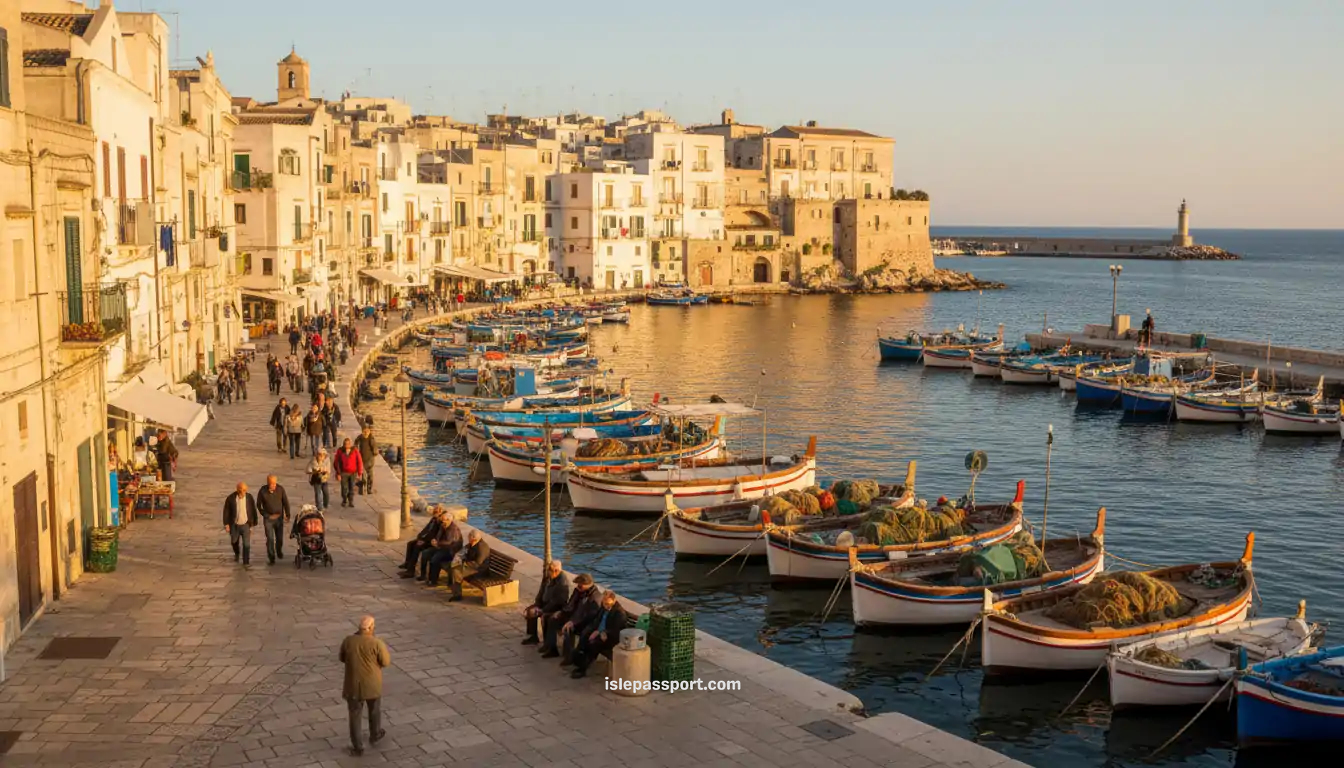
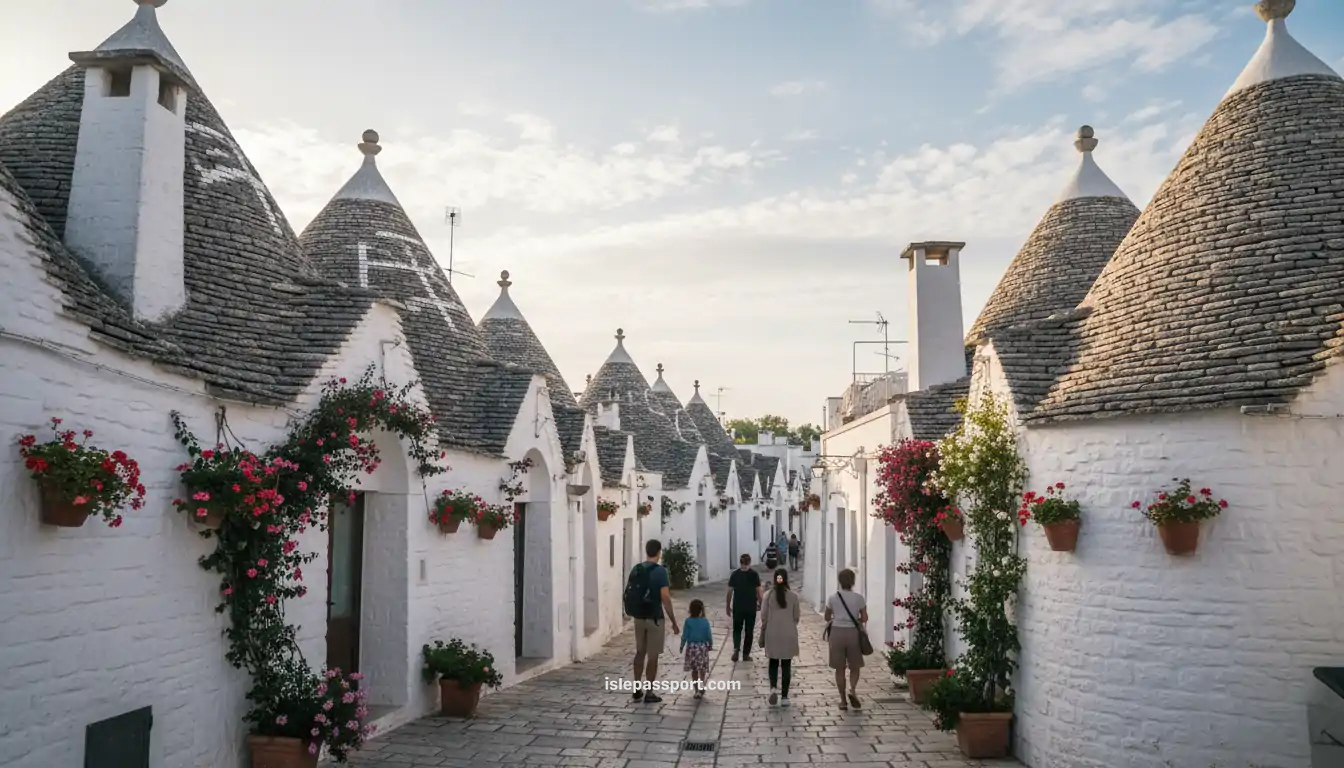
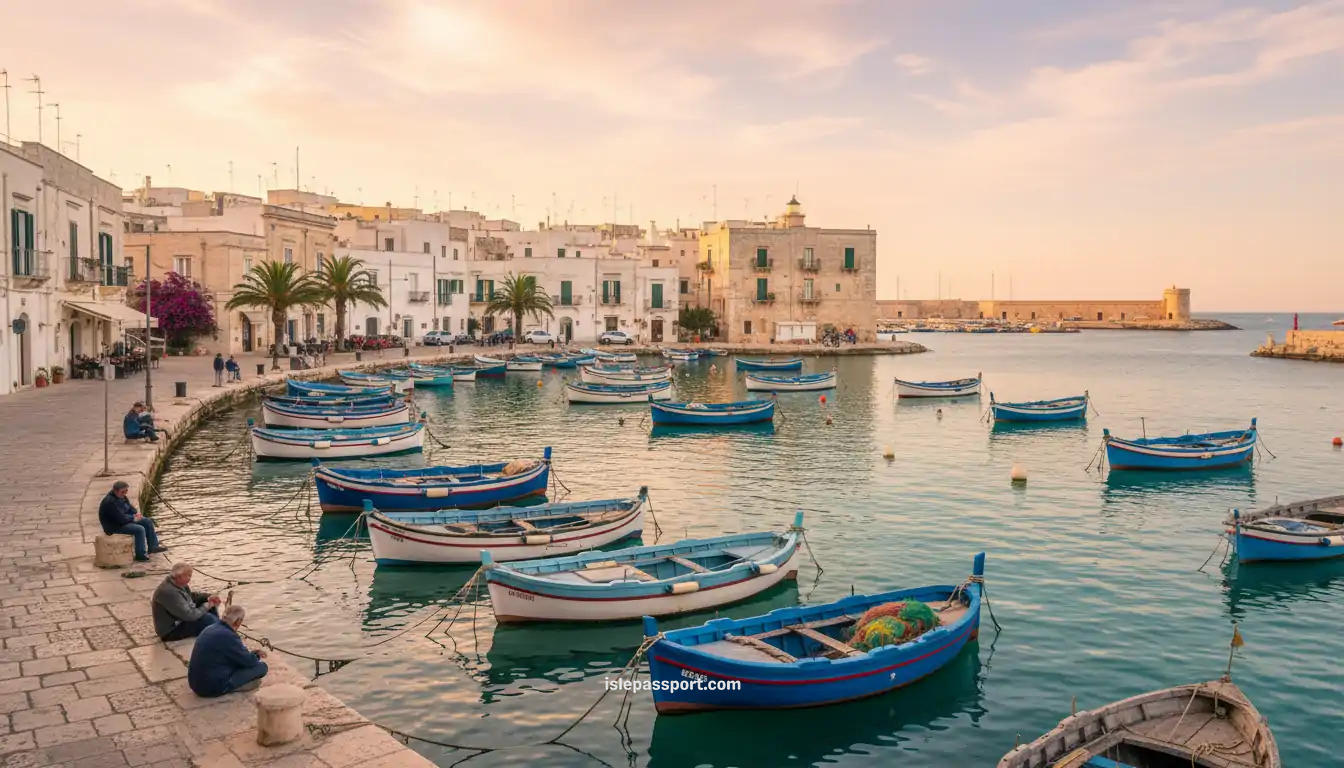
When it comes to affordable Italian coastal towns for remote workers, this coastline in Puglia is hard to beat.
You can base yourself in Bari (bigger city, airport, universities) and take fast trains to Polignano a Mare and Monopoli in under 30–35 minutes. Or you can base yourself directly in Polignano/Monopoli if you prefer small seaside towns.
Why it works
- Puglia is one of the most affordable regions in Italy with growing fiber coverage.
- Bari has solid internet speed coastal Italy standards: 100–300 Mbps in most central apartments.
- Polignano and Monopoli are small but surprisingly well connected.
- Great café culture and tons of local restaurants.
- Amazing weather from April to October, with warm sea later in the season.
Cost of living (monthly)
- Bari rent (1BR): €550–750
- Polignano / Monopoli (off-season): €500–800, in August more.
- Groceries: €180–250
- Eating out: €150–250
Best for
- For nomads who want sunshine, great food, and a seaside base in Italy—without Rome or Milan prices.
- People who want to explore more of Puglia on weekends (Alberobello, Ostuni, Lecce, Salento coast).
Downsides
- August gets crowded and more expensive.
- Not a massive international nomad community yet — more of a mix of locals, some expats, and slow travelers.
3. Cagliari (Sardinia) – City Base, Beaches in Bus Distance
Sardinia is often seen as just a holiday island, but Cagliari is a real city—with real potential for digital nomads on Italy’s coast.
Why it works
- Fiber internet in most central neighborhoods.
- Proper city: hospitals, supermarkets, coworking spaces, universities.
- Poetto Beach easily reachable by bus or bike.
- International airport with links across Europe.
- Warm climate, especially nice in shoulder seasons.
Cost of living (monthly)
- Rent: €650–900
- Groceries: €200–280
- Eating out: €180–300
- Coworking: €100–200
Best months
- April–June, September–November.
- July–August very hot and busy.
Walkability & transport
- Center is walkable, but some hills.
- Buses are good enough for day-to-day life.
- A scooter helps if you want to explore the coast deeply.
Who it’s for
- Nomads who want an Italian island base with real infrastructure and quick access to beaches.
- People who like a balance between city life and nature.
Who it’s not for
- Those expecting “tiny village on the sea” vibes — Cagliari feels like a proper town, not a resort.
4. Palermo (Sicily) – Big, Messy, Authentic & Surprisingly Good for Remote Work
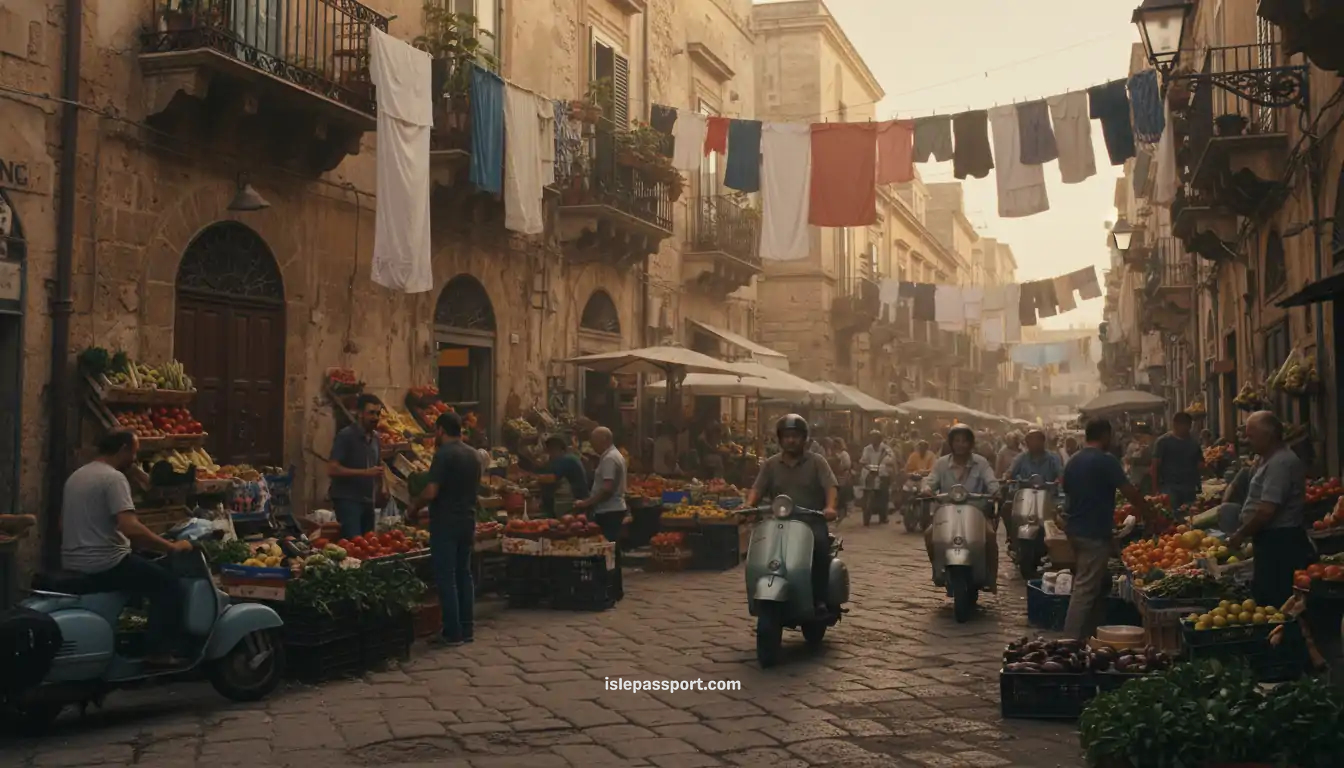
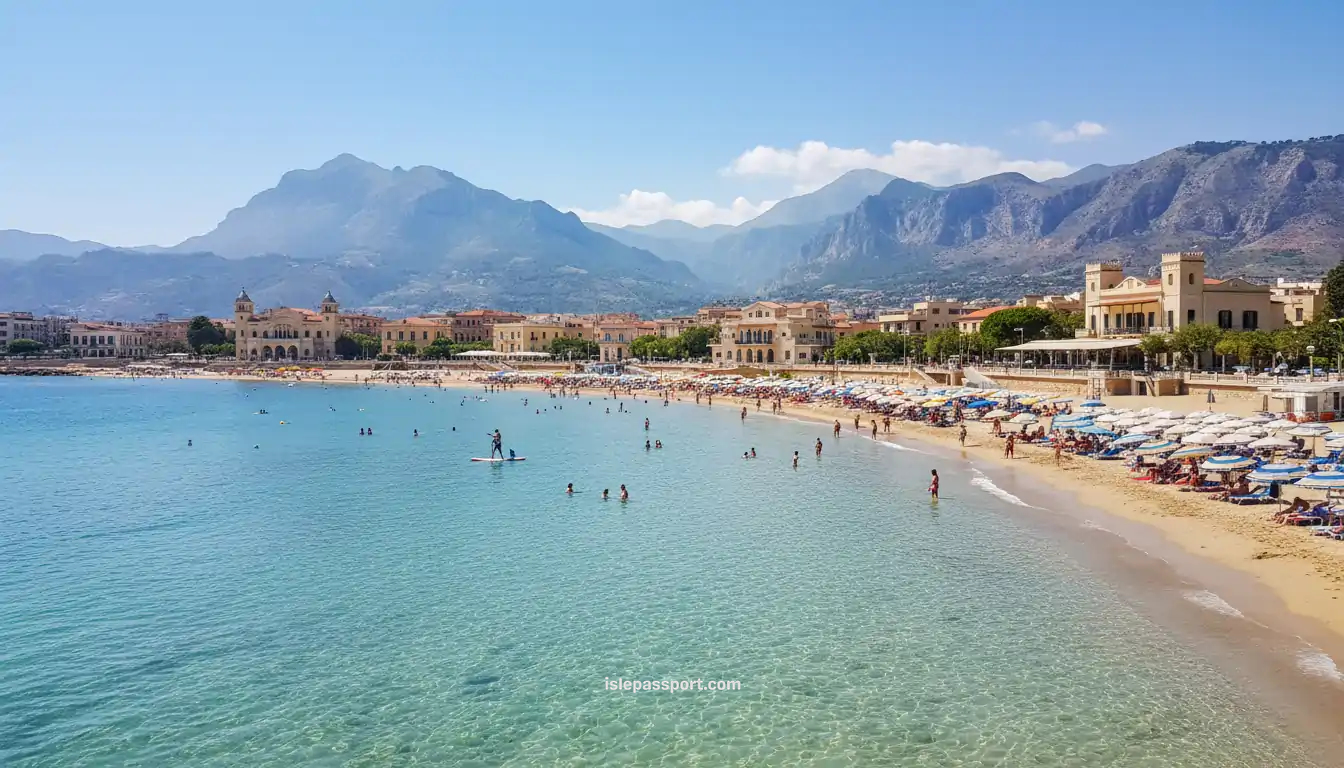
Palermo is chaotic and intense — and that’s exactly why some digital nomads fall in love with it.
Why it works
- Central areas increasingly have fast Wi-Fi and even fiber.
- Authentic café culture: lots of places where you can work for a while without feeling weird.
- Good coworking spaces and a slowly growing nomad community.
- Access to beaches like Mondello via bus.
- Cost of living is lower than northern Italy.
Monthly costs
- Rent (1BR): €500–750
- Groceries: €180–250
- Eating out: €150–250
Best months
- March–June, September–November.
- July–August is hot and crowded, but still doable.
Pros
- Amazing street food.
- Rich culture, lots of events.
- Big enough that you won’t get bored after a month.
Cons
- Traffic, noise, and typical Sicilian bureaucracy.
- Some areas feel rough, especially at night — choose your neighborhood wisely.
Who it’s for
- Nomads who prefer real cities over curated tourist zones.
- People who don’t mind some chaos as long as the food and Wi-Fi are good.
5. Salerno (Campania) – Amalfi Coast Base with Fiber & Fair Prices
Salerno is my go-to answer when people ask for the best coastal town in Italy for remote work near the Amalfi Coast—without paying Amalfi prices.
Why it works
- Direct high-speed trains from Rome and the north.
- Solid fiber coverage in the city.
- Proper city: hospitals, shops, coworking, real rental market.
- Ferries and buses to Amalfi, Positano, Capri, Cilento Coast.
- Good walkability with a long seaside promenade and historic center.
Monthly costs
- Rent: €650–900
- Groceries: €200–260
- Eating out: €180–300
Best months
- April–June, September–October.
- July–August are peak Amalfi season, but Salerno is still less touristy than the famous villages.
Who it’s for
- Nomads who want to visit Amalfi regularly but not actually live on a cliff.
- People who value train/ferry access and a real city vibe.
6. Viareggio (Tuscany) – Flat, Walkable, and Easy for Weekend Trips
Viareggio rarely shows up on best Italy coastal towns with Wi-Fi lists, but for digital nomads it quietly works.
Why it works
- Flat, walkable town with a long seaside promenade.
- Fiber internet quite common in apartments.
- Easy trains to Pisa, Lucca, Florence, and even Cinque Terre with a change.
- Lots of comfortable cafés and pastry shops.
- Wide sandy beaches (paid lidos + some free areas).
Monthly costs
- Rent: €650–900 (cheaper outside peak summer)
- Groceries: €200–270
- Eating out: €180–300
Best months
- May–June, September.
- July–August: more family tourism, higher prices.
Who it’s for
- Slow travelers who like routine: morning walk, groceries, few hours of work, late afternoon beach.
- Perfect for people who want to explore Tuscany and Liguria easily on weekends — and if that’s you, don’t miss my full guide on the best Tuscany coastal towns near Florence.
7. Taranto / Lecce Coast (Puglia) – Deep-Work Territory with Fast Fiber
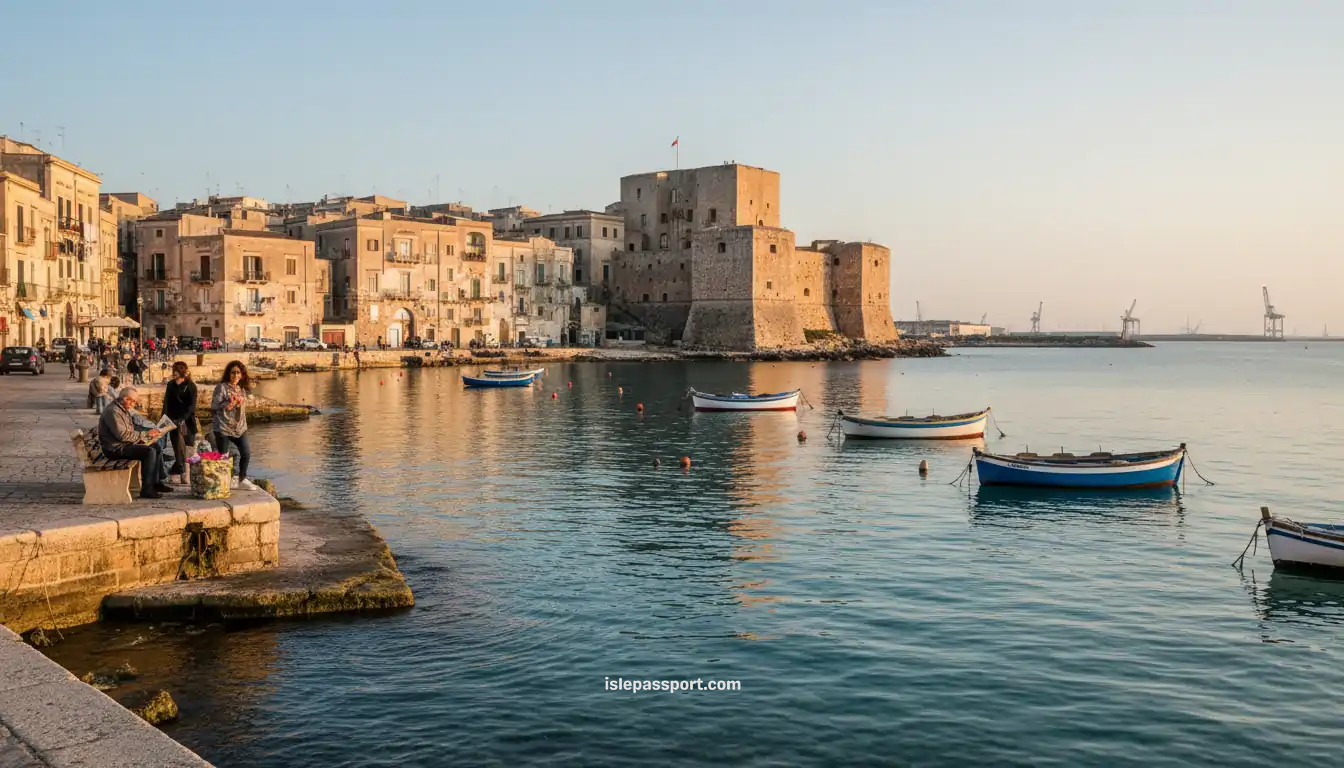
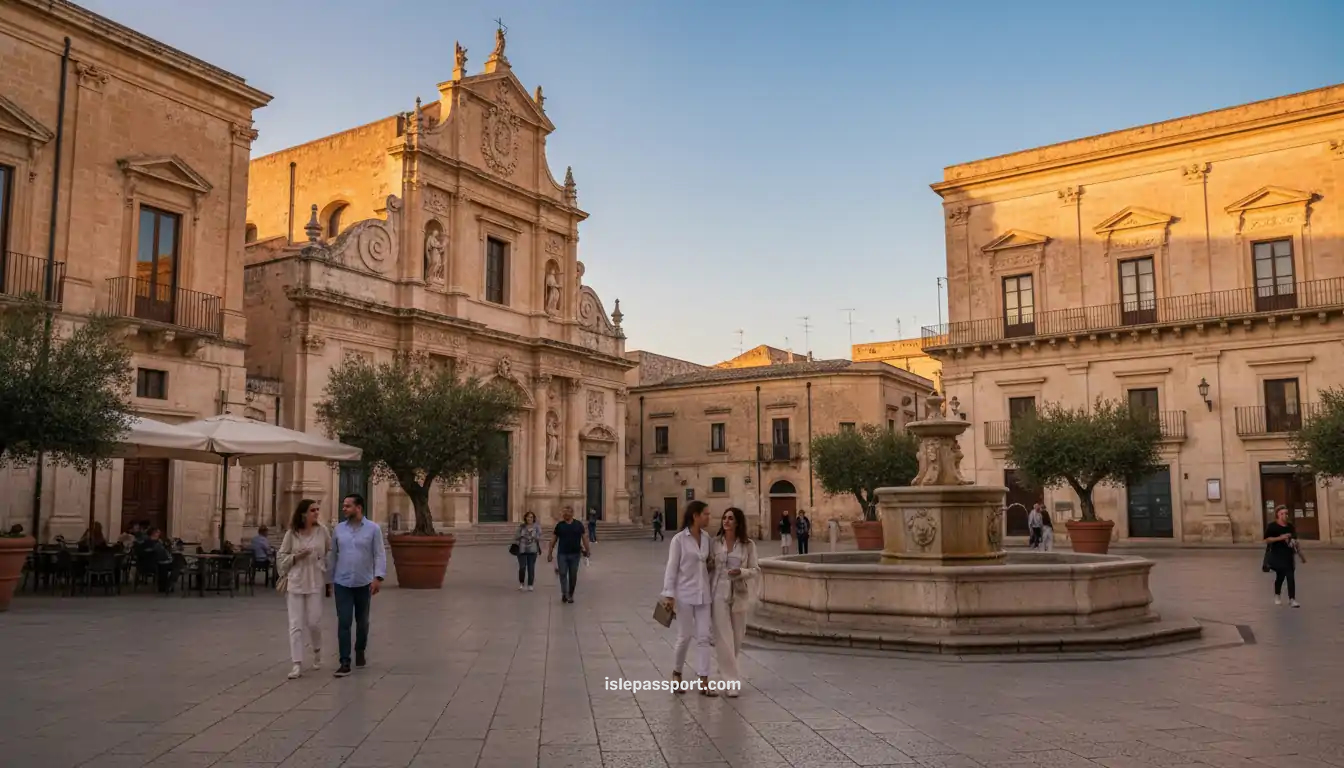
If you’re looking for the best affordable Italian coastal towns for remote work—and you’re not worried about having a big digital nomad scene just yet—the Taranto and Lecce coastline is worth a serious look.
Think: long stretches of beach, small towns, and more locals than tourists.
Why it works
- Puglia has invested heavily in fiber; many mid-sized towns now have 100–300 Mbps connections.
- Rent is significantly cheaper than the north.
- You can find very affordable longer-term leases if you stay more than a month.
- Perfect for deep work seasons: fewer distractions, lots of nature.
Approx monthly costs
- Rent: €450–650
- Groceries: €150–230
- Eating out: €120–220
Downsides
- Very limited coworking or nomad community.
- Some areas are car-dependent.
- August is slammed with Italians on holiday and prices jump.
Who it’s for
- Remote workers who want focus, low cost, and access to beaches more than a big social scene.
8. Catania (Sicily) – Base City with Beaches & Volcano Weekends
Catania gives you something rare: a coastal city with an airport, fiber, beaches nearby, and a mountain (Etna) behind it.
Why it works
- Fiber internet widely available in central flats.
- Airport with low-cost flights across Europe.
- Coworking spaces and a developing remote-work community.
- Access to beaches (La Playa, Aci Trezza) and easy trips to Taormina, Siracusa, Etna.
Monthly costs
- Rent: €500–750
- Groceries: €180–250
- Eating out: €150–250
Best months
- April–June, September–November.
- Summer can be very hot.
Downsides
- Some neighborhoods feel rough; choose your area.
- Traffic isn’t fun.
Who it’s for
- Nomads who want a base for Sicily slow travel with good connections and infrastructure.
9. La Spezia (Liguria) – The Only Way Cinque Terre Makes Sense for Nomads
Cinque Terre villages are stunning — and terrible bases for remote work. Tiny, expensive, seasonal, and not built for sustained laptop life.
La Spezia is the workaround.
Why it works
- Real city just next to Cinque Terre.
- Fiber in most central apartments.
- Direct train into all the Cinque Terre towns in minutes.
- Cheaper rents than the villages.
- Grocery stores, normal cafés, and a proper train station.
Monthly costs
- Rent: €650–900
- Groceries: €200–270
- Eating out: €180–300
Best for
- Nomads who want to explore Cinque Terre often but base somewhere practical.
- People who want hiking + sea on weekends, workdays in a quiet town.
Best Coastal Towns in Italy for Digital Nomads… Depending on What You Want
Best for Low Cost of Living
If your focus is finding the best cheap Italian coastal towns for remote work, start here.
- Bari / Polignano / Monopoli
- Taranto / Lecce Coast
- Palermo
- Catania
These are the coastal towns in Italy where the cost of living actually makes sense for digital nomads — reasonable rent, great food value, and lower day-to-day expenses.
If these spots are still feeling a bit pricey, you should definitely check out my latest guide on affordable Italian coastal bases for remote work. I found a few more gems like Pescara and Tropea that are surprisingly easy on the wallet but still have everything you need to actually get work done.
Best Connectivity & Fiber Internet
If your main fear is freezing on Zoom:
- Trieste
- Cagliari
- La Spezia
- Bari
These are your safest bets for fast internet and reliable infrastructure along the Italian coast.
Best Walkability Without a Car
You don’t want to drive? These towns work well:
- Trieste
- Bari / Monopoli
- La Spezia
- Viareggio
You can live easily on foot + trains here.
Best Shoulder-Season Weather
For spring/autumn nomad life by the sea:
- Palermo
- Catania
- Cagliari
- Puglia towns (Bari, Lecce area)
These places stay pleasant when northern coasts get chilly.
Best Café Culture for Working
If you like doing most of your work from cafés:
- Trieste (seriously, it’s built for this)
- Palermo
- Bari
Average Cost of Living in Italian Coastal Nomad Towns
Here are rough monthly cost ranges for digital nomads on the Italian coast — based on the towns featured in this guide.
| Category | Cheaper Towns (Puglia, Sicily) | Mid-Range Towns (Trieste, La Spezia, Cagliari) |
|---|---|---|
| Rent (1BR) | €450–650 | €800–1200 |
| Groceries | €150–250 | €250–350 |
| Cafés / Eating out | €120–250 | €200–400 |
| Coworking | €80–150 | €120–250 |
| Transport | €40–80 | €60–150 |
These ranges are based on 1–3 month stays in coastal towns, not one-week holiday prices.
Internet in Coastal Italy — What to Expect (Realistic, Not Idealized)
Average Wi-Fi by Region (very rough)
- Northern/coastal cities (Trieste, La Spezia): often 100–1000 Mbps fiber
- Central / Tuscany coast (Viareggio): 50–200 Mbps
- Southern cities (Bari, Palermo, Catania): 50–300 Mbps
- Smaller villages: anything from 6 Mbps ADSL to 100 Mbps fiber — always test before committing
- For official broadband coverage and fiber availability, you can check the latest data on Data Europa.
SIM & Data Options
If you’re working remotely on the Italian coast, always keep a local SIM as a backup:
- TIM, Vodafone, WindTre, Iliad all have strong coverage in most coastal areas.
- Expect good 4G and growing 5G around cities.
- A portable router or phone hotspot is essential for calls.
What to Pack
- Small travel router (for hotel/Airbnb Ethernet or SIM)
- USB-C Ethernet adapter
- Extension cord (old buildings = limited outlets)
Where Digital Nomads Should Not Go in Coastal Italy
Some places are beautiful for a few days but make terrible long-term bases. I’d be careful with:
- Tiny cliff villages with only one road and no supermarket
- Coastal towns that shut down almost completely from October to April
- Villages where landlords still think ADSL is “perfectly fine”
- Instagram-famous spots like Portofino or Positano if you need to work full-time
They’re great for slow travel, but I wouldn’t move in long-term without checking the apartment and Wi-Fi in person.
Digital Nomad Visas, Taxes & Legal Basics
Italy is slowly opening more to remote workers, but for now, this is the basic picture:
- Most non-EU travellers: 90 days in any 180-day period in Schengen.
- Italy has approved a form of digital nomad / remote worker visa, but implementation details still shift — always check official consulate pages.
- Long-term residents may qualify for certain tax incentives in the south, but that’s a whole separate deep dive.
- If you’re considering the new Italian digital nomad visa, the Ministry of Foreign Affairs has the most up-to-date requirements and eligibility details.
Treat this guide as a where-to resource, not a legal one. When you narrow down a town, then look up the latest visa rules.
Italy Works for Nomads… If You Pick Right
Italy from a distance looks like a dream: espresso in the morning, sea views from your laptop, sunsets over medieval harbors. And you can have that — but not in every single coastal village, and not if you ignore things like Wi-Fi, rent, and off-season closures.
If you choose your base carefully, living on the Italian coast as a digital nomad can be one of the best lifestyle combinations in the world:
- Trieste if you want culture, fiber, and a Central European feel
- Bari or Puglia if you want warmth, affordability, and beaches
- Cagliari or the Sicilian cities if you want island life with real infrastructure
- La Spezia, Viareggio, Salerno if you want practical access to the “famous” coasts without living in a postcard
Start with one town, stay at least a month, and treat Italy as a place to live, not to rush through. Slow travel fits the culture here — and it makes remote work so much easier.
📌 Italy is amazing for remote work, but if you’re considering other sunny bases in Europe or beyond, check out my full list of the best islands for digital nomads — ranked by Wi-Fi, cost of living, visas, and long-term livability.
Before You Go..
To go deeper into specific regions and build your own route, check:
- 15 Best Coastal Towns in Italy
- 7 Gorgeous Tuscany Coastal Towns Near Florence
- 6 Coastal Towns Near Rome for the Perfect Beach Escape
- 7 Best Coastal Towns Near Naples Italy (Must-See Picks)
- And if you’re building a long-term Italy route, my Coastal Escapes Italy hub maps out every major coastline in one place, including Sicily, Puglia, and Liguria.
And if you want a follow-up guide on exact neighborhoods, coworking spaces, and landlord questions to ask in each of these towns, just tell me and I’ll map that out next.
💛 Loved this guide?
If it helped you plan your trip or discover somewhere new, you can help me create the next one. Every guide is free to read, independently researched, and made with travellers like you in mind.
